Last updated: September 2026
Hakone looks quite small on a map.
That can be misleading.
The distances between places might not look particularly intimidating, but there is something a map doesn’t really show you:
the hills.
And there are a lot of them.
I’ve been living and working in Hakone for a few months, and I’ve mainly got around using the Hakone Tozan Train, local buses and my own two feet.
I haven’t used the cable car, ropeway or sightseeing cruise. I actually like walking, and I tend to treat Hakone’s hills as free exercise.
Sometimes, though, they feel less like exercise and more like punishment.
So if you’re wondering whether you can explore Hakone without renting a car, the short answer is:
Absolutely. Just don’t mistake “walkable” for “flat”.
Here’s what I’ve actually found useful.
Can You Visit Hakone Without a Car?
Yes.
I’ve managed perfectly well without one.
Despite all the different trains, buses, cable cars and ropeways you see on Hakone transport maps, I haven’t found getting around particularly confusing.
I normally just open Google Maps, put in where I want to go and follow the route. So far, that’s been enough to get me where I’m going.
I haven’t found the bus stops particularly difficult to locate either.
So if you’re worried that you need to rent a car simply because Hakone is mountainous, I wouldn’t say that’s necessary.
Public transport isn’t the part I’d worry about.
Walking is.
The Hakone Tozan Train: Beautiful, Slow, and Very Hakone
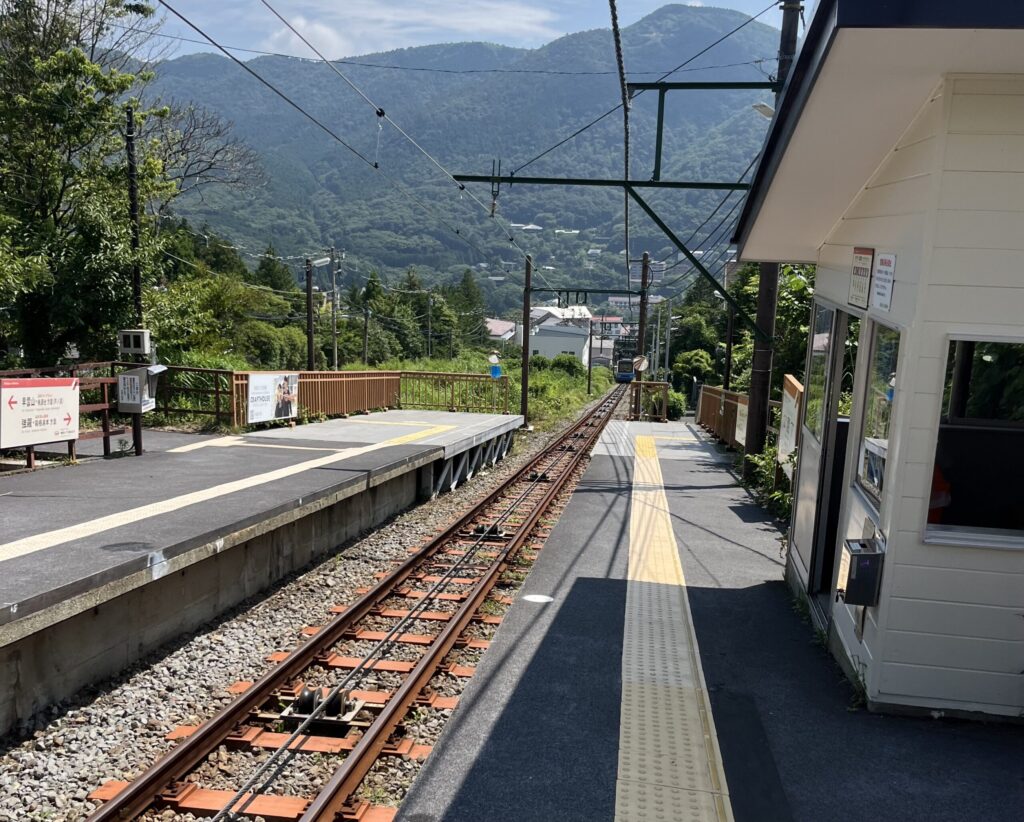
I’ve taken the Hakone Tozan Train between Hakone-Yumoto and Gora many times.
The journey covers 8.9 kilometres and takes roughly 40 minutes. The railway climbs steeply through the mountains and uses switchbacks along the way.
And the scenery really is lovely.
You’re surrounded by mountains and greenery, and on a clear day, just looking out of the window can be part of the experience.
It also makes you realise just how mountainous Hakone actually is.
The switchbacks were particularly interesting the first time I travelled on the train.
I remember thinking:
Oh, so this is how a train gets up a mountain like this.
I genuinely found it quite fascinating.
The second time?
Not quite as exciting.
After you’ve done it a few times, the novelty wears off and you start thinking:
Right. Can we just get up the mountain now?
Forty minutes from Hakone-Yumoto starts to feel rather long when you just want to get to Gora.
I’ve never experienced anything resembling a Tokyo rush-hour train here. In my experience, it’s usually somewhere around the point where you can just about get a seat — or just about can’t.
If you’re boarding at Hakone-Yumoto or Gora, I’ve generally found that your chances of getting a seat are pretty good.
One thing worth considering, though, is luggage.
The trains aren’t particularly large, and when lots of tourists are travelling with suitcases, the carriages can suddenly feel much smaller.
Taking the Bus: Easy Enough, With One Slightly Confusing Detail
I’ve actually used the local bus much less than the train.
One journey I took was from the Kowakien area to Motohakone. The bus arrived reasonably close to schedule, and paying was easy.
If you’re using contactless payment, you tap when you get on and again when you get off.
There’s one small thing I noticed, though.
Some overseas visitors seemed unsure about where they were supposed to tap.
And I could understand why.
The IC-card reader and the terminal for contactless bank cards are separate. If you’ve never used a Japanese bus before, it isn’t necessarily obvious which one you’re supposed to use.
I watched a few passengers hesitate and ask the driver for help.
So if you’re using a bus in Hakone for the first time, don’t panic if you see more than one reader. Just check which terminal matches your payment method.
Once you know that, the system is straightforward.
Contactless bank-card payment is now also available across several other forms of Hakone transport, including the Hakone Tozan Train, cable car, ropeway and sightseeing cruise.
The Biggest Thing Maps Don’t Tell You: Hakone Is Steep
This is probably the most important thing I can tell somebody coming to Hakone for the first time.
Do not judge a walk here by distance alone.
Especially around Gora.
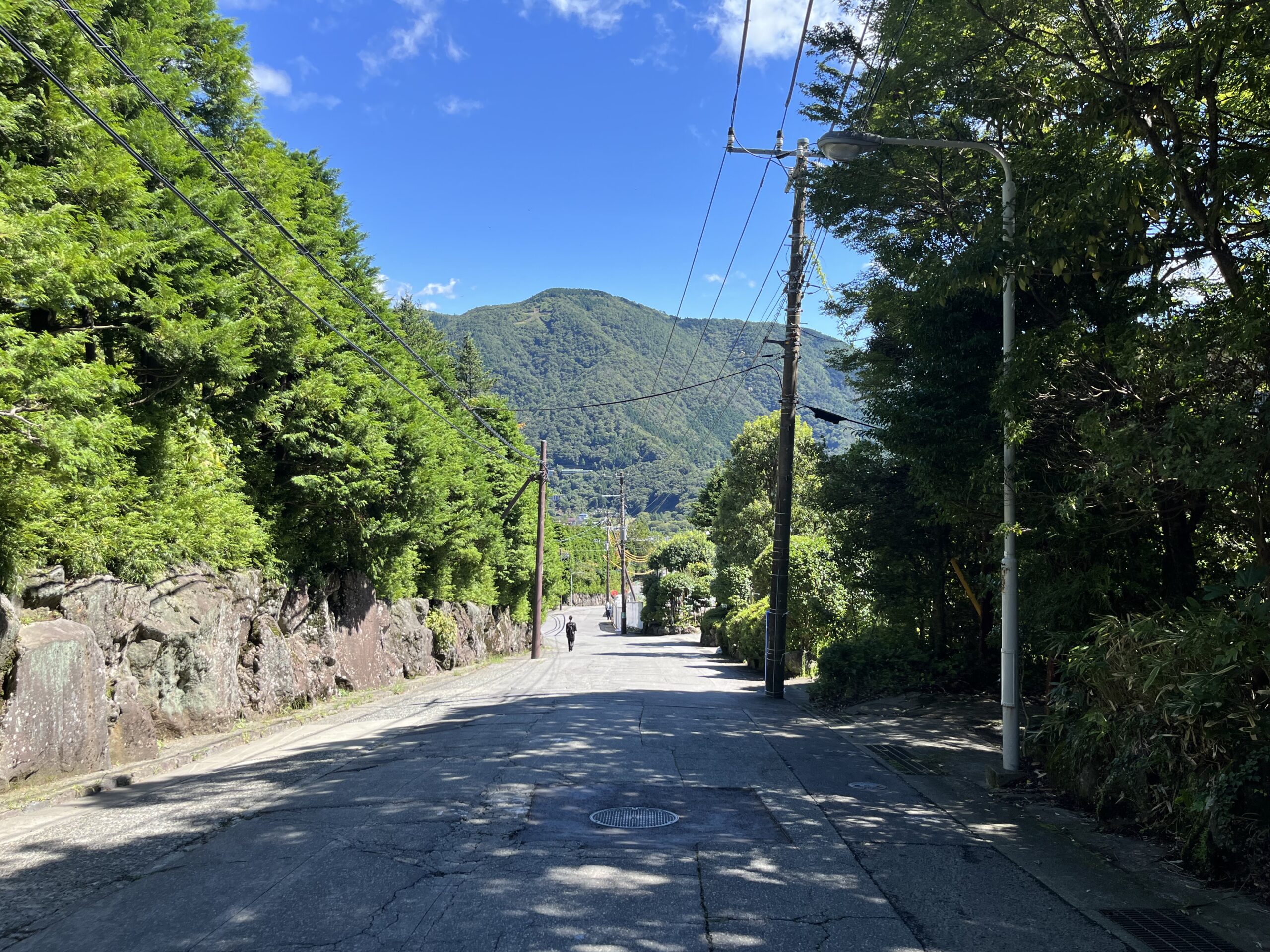
The immediate area around Gora Station is relatively flat, but start heading towards some of the hotels above the station and things change very quickly.
It’s hill after hill.
And some of them feel ridiculously steep.
Walking up them is basically a leg workout. Your heart rate goes up, you start breathing harder, and suddenly that innocent-looking walk on Google Maps doesn’t feel quite so innocent anymore.
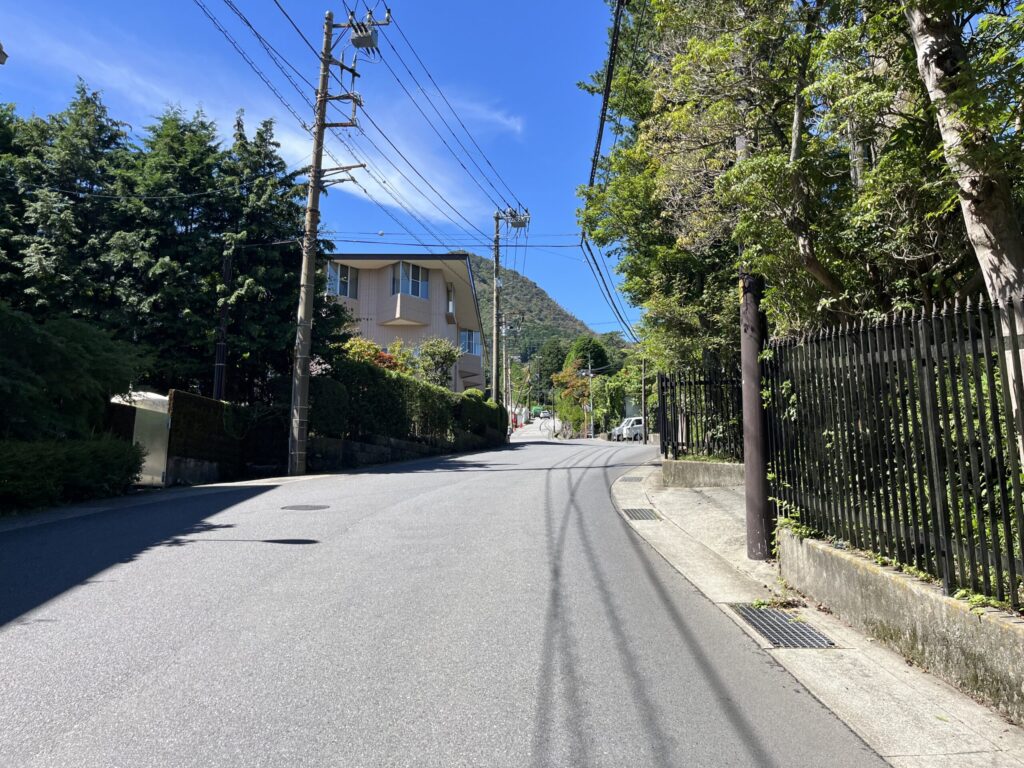
When I first arrived in Gora and walked uphill from my workplace towards my accommodation, I was sweating and my heart was pounding by the time I got there.
And I didn’t even have a suitcase.
I’ve since watched hotel guests arrive pulling large suitcases up these hills.
They come through the door breathing heavily:
“I’m exhausted.”
I believe them.
I’ve also seen tourists stop halfway up hills just to catch their breath before continuing.
For older travellers or anyone with limited mobility, some of these walks could be a serious burden.
And it isn’t only Gora. Once you start heading higher into Hakone, you need to remember that you’re travelling through a mountain resort.
So when Google Maps tells you that your hotel is “only” a short walk from the station:
check the terrain as well as the distance.
Your legs may thank you later.
Travelling With a Suitcase? Be Careful
This deserves its own warning.
If your accommodation is uphill from the station, I’d think twice before deciding to walk there with a large suitcase.
I’ve watched enough guests struggle up the hills to know that this isn’t a theoretical problem.
Rolling a suitcase along flat streets is one thing.
Dragging it up a steep Hakone road is something else entirely.
If you’re travelling light and reasonably fit, walking can actually be enjoyable. I walk a lot here myself and deliberately use the hills as exercise.
But that’s very different from arriving after a long journey with a heavy suitcase behind you.
Check exactly where your accommodation is before you arrive.
A hotel that looks conveniently close to a station on a map may feel very different once you see the road leading to it.
And if your hotel offers a shuttle or luggage service, this is one of those places where it may actually be worth using it.
Would I Stay in Gora as a Transport Base?
Personally, no.
If I were visiting Hakone as a tourist and choosing one place as my base, I’d stay around Hakone-Yumoto rather than Gora.
Gora is connected to several parts of Hakone by train, cable car and bus, so the transport connections themselves aren’t the problem.
The geography around the station is.
If your hotel happens to be up one of those steep roads, every innocent little trip back to your room can turn into another workout.
Hakone-Yumoto feels more practical to me for a first visit. You naturally pass through it when arriving from the Odawara side, there are plenty of places to eat and buy souvenirs around the station, and you can still take the Hakone Tozan Train directly to Gora.
That doesn’t mean Gora is a bad place to stay.
If you’ve found a particular ryokan there that you really want to experience, that may matter far more than convenience.
It’s simply not the base I would choose, having spent a lot of time getting around this part of Hakone on foot.
What About the Cable Car and Ropeway?
I haven’t used either.
Not once.
Which is slightly ridiculous considering I’ve been living in Hakone.
The reason is simple: I like walking.
If there’s a hill I can walk up, part of me thinks:
Well, that’s free exercise.
So I’ve spent a lot of my time walking up and down hills instead.
For a normal visitor trying to see Hakone efficiently, however, my approach probably isn’t the most sensible one.
The cable car and ropeway are both part of Hakone’s public transport network, and they’re useful for reaching areas I haven’t covered personally by those forms of transport.
But I haven’t ridden them, so I’m not going to pretend I can tell you what the experience is like.
For routes, fares and current operating information, check the official Hakone transport website before travelling.
I Didn’t Even Know the Hakone Freepass Existed
I’ve been living in Hakone and somehow didn’t know about the Hakone Freepass.
So no, I’ve never used it.
But if you’re coming here specifically to travel around Hakone for two or three days, it’s worth knowing about.
The pass currently provides unlimited travel on eight designated forms of transport in the Hakone area, including the Hakone Tozan Train, cable car, buses, sightseeing cruise and ropeway.
I can’t tell you from personal experience whether it will save you money.
What I would do is simple:
If your itinerary involves several trains, buses, ropeway journeys or boat trips, compare the current Freepass price with what you’d otherwise pay individually.
If you’re mostly walking and only taking one or two rides, don’t assume you need it just because it’s marketed to tourists.
Prices and conditions can change, so I’d check the current details directly with Odakyu rather than relying on an old blog post.
Check the Hakone Freepass on Odakyu’s official website
Do You Need a Car in Hakone?
I don’t think you do.
I’ve been getting around using trains, buses and walking, and for the most part it hasn’t been difficult.
Google Maps has been enough for me to navigate the public transport I’ve used, and the growing availability of contactless payment makes things easier.
A car would certainly give you more freedom and could make visiting several places in one day more efficient.
But there’s another side to driving here.
Hakone really is in the mountains.
The roads twist their way through steep terrain, and bad weather can bring poor visibility and fog. If you’re not comfortable driving on mountain roads, renting a car isn’t automatically the easier option.
So I wouldn’t rent one simply because you’re worried that Hakone is impossible without it.
It isn’t.
If a friend were visiting Hakone for the first time, the main thing I’d tell them wouldn’t actually be about trains or buses.
I’d tell them this:
Hakone is in the mountains. Plan accordingly.
Especially if you’re bringing a suitcase.
Current Note — September 2026
This article is based mainly on my own experience living, working and travelling around Hakone. I’ve personally used the Hakone Tozan Train, local buses and walked extensively around the area.
I haven’t personally used the Hakone Tozan Cable Car, Hakone Ropeway, sightseeing cruise or Hakone Freepass, so I’ve deliberately avoided presenting those as personal recommendations.
Transport fares and payment systems can change, so check the official information before travelling.