Owakudani was much smaller than I expected.
And yet, if you’re visiting Hakone for the first time, I still think you should go.
That probably sums up my experience better than anything else.
I visited on the morning of 29 July, took a bus from Naka-Gora, spent about an hour and a half there including lunch, ate the famous black eggs, tried a surprisingly good egg soft serve and stared at steam rising from the volcanic slopes.
Would I go again on my own?
Probably not.
Am I glad I went?
Absolutely.
Here’s what Owakudani was actually like.
Getting to Owakudani by Bus — And Getting Stuck in Traffic
I went by bus from Naka-Gora rather than taking the ropeway.
My journey took around 40 minutes, although traffic was partly responsible for that.
As we got closer to the Sounzan area, everything slowed down. From there, the bus gradually crawled uphill towards Owakudani.
By the time I arrived at around 10:50, the car park was already full and the place was packed with visitors.
I hadn’t realised Owakudani would be this popular.
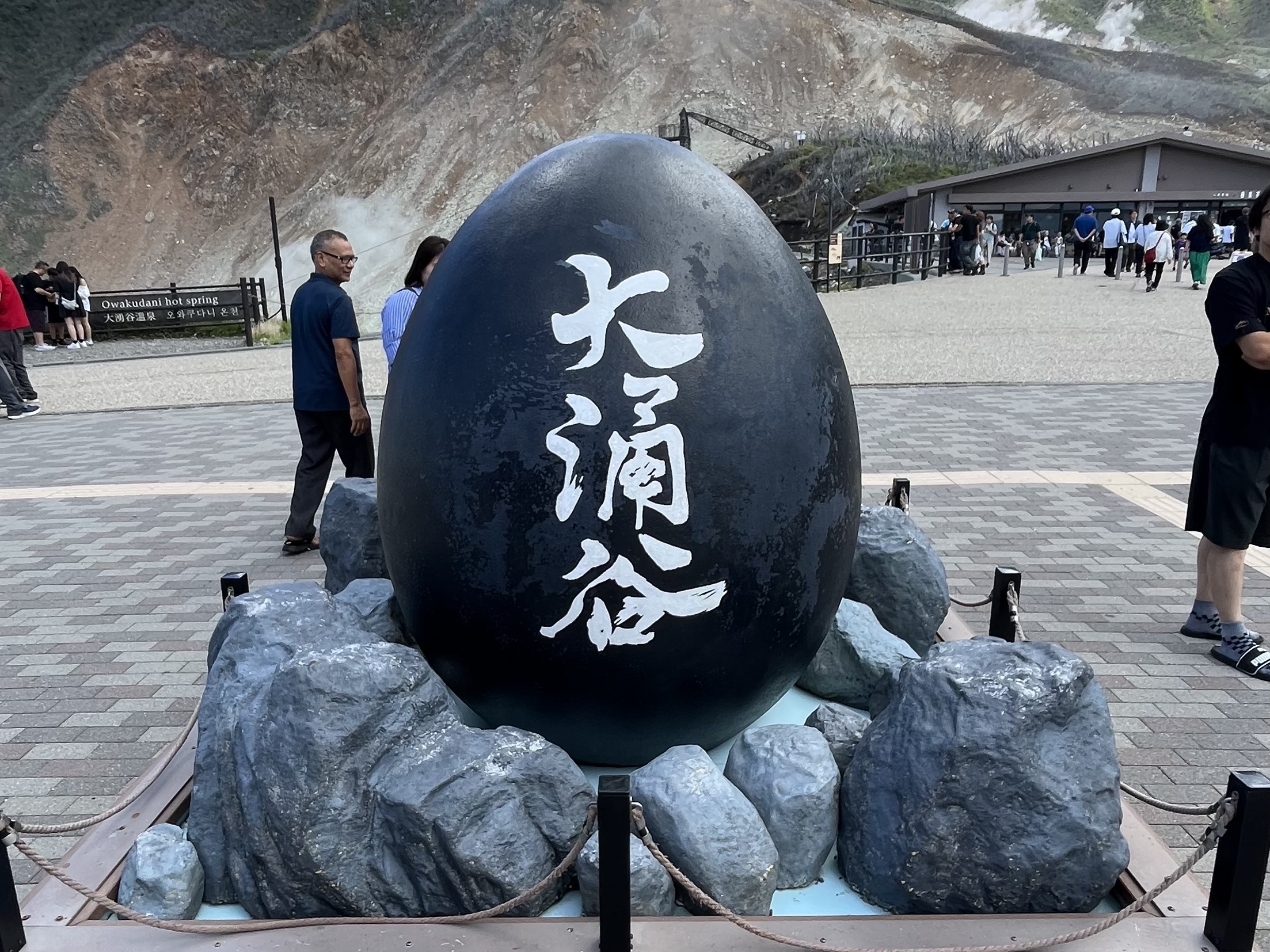
People were eating black eggs everywhere, and there was a steady stream of visitors taking turns posing in front of the giant black egg monument.
I could have reached Owakudani via the cable car and ropeway instead. I chose the bus because it was cheaper, but I have to admit that travelling above the volcanic landscape on the ropeway sounds much more interesting.
If I went back with someone else, that’s probably how I’d do it next time.
If you’re planning to explore Hakone by public transport, I’ve also written about getting around Hakone without a car.
My First Impression: Ohhh!
The moment I stepped off the bus, I could smell the sulphur.
And then I looked up.
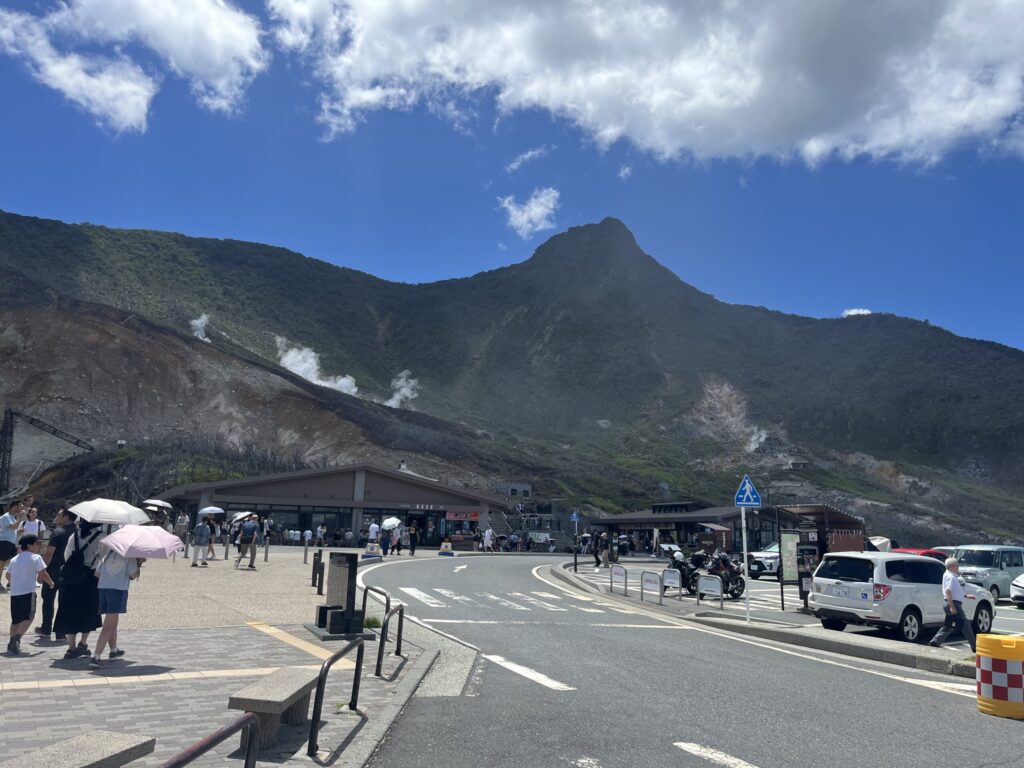
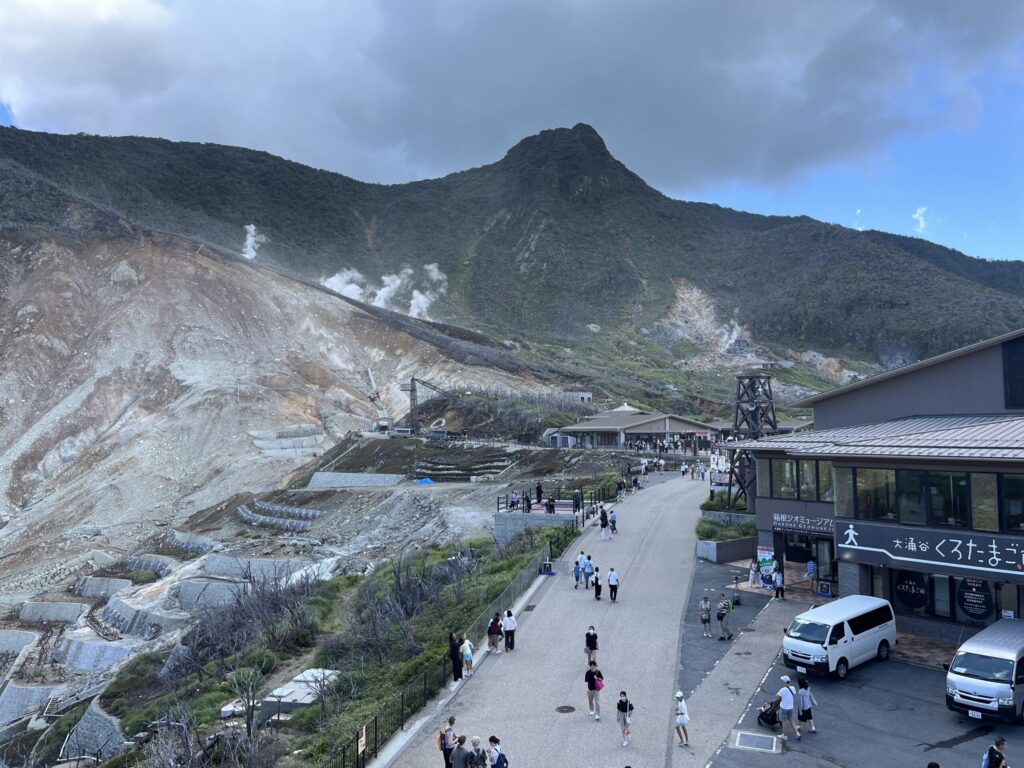
The volcanic slopes were right there in front of me — much closer than I’d imagined — with steam rising from the ground.
My reaction was basically:
Ohhh!
It immediately felt different from the rest of Hakone I’d seen.
The slopes looked rough and almost barren in places. There were patches of dead-looking trees without leaves, exposed rock and gravel, and steam rising from different parts of the valley.
Looking at that landscape, it wasn’t difficult to understand why Owakudani was once called Oojigoku, or “the Great Hell”. The area was renamed Owakudani in 1873, before a visit by Emperor Meiji and Empress Shoken.
There was also construction work taking place when I visited, with retaining structures visible on the slopes and machinery working in the area.
It wasn’t a perfectly untouched volcanic landscape.
But it certainly didn’t look like somewhere I see every day.
Much Busier Than I Expected
Another surprise was just how many international visitors were there.
From what I saw that morning, there seemed to be more overseas tourists than Japanese visitors around me.
The viewpoints were busy with people taking photos, and there were plenty of visitors arriving by bus.
But despite the crowds, I never found it unpleasant.
It was busy, definitely.
Just not get me out of here busy.
Lunch With a Pretty Spectacular View
I ordered an Owakudani katsu curry for lunch and managed to get a seat by the window.
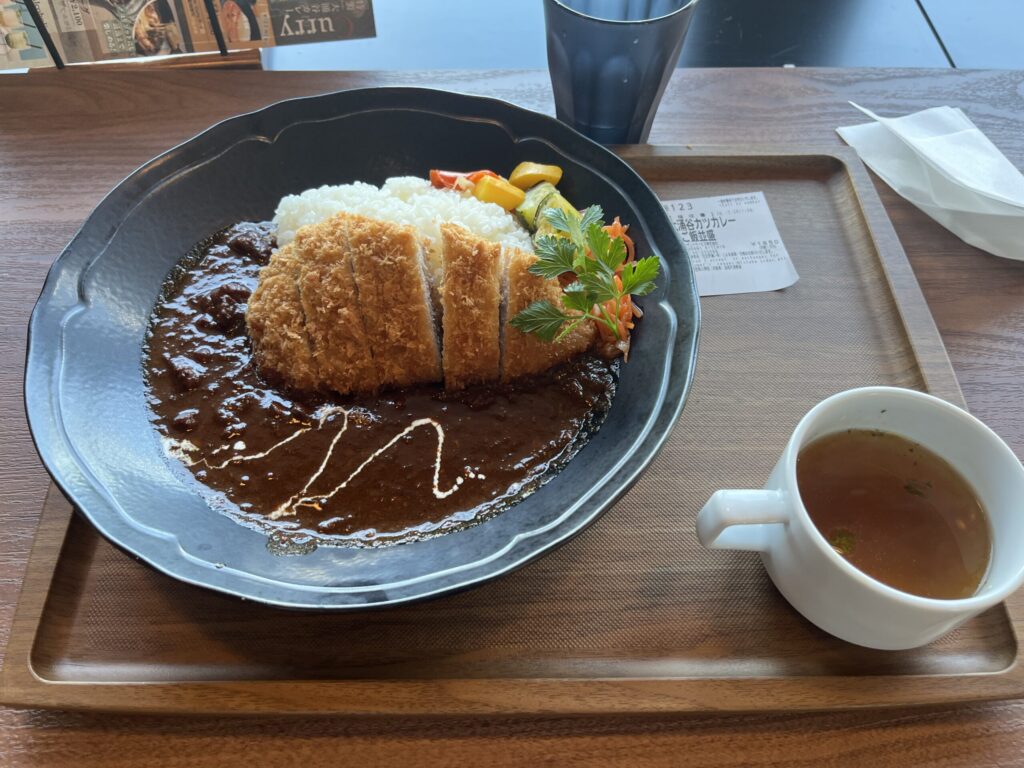
The food was nice, but what I remember more clearly is the view.
I could see the viewpoint and the mountains surrounding Owakudani, and beyond them, in the distance, I could even make out Sagami Bay.
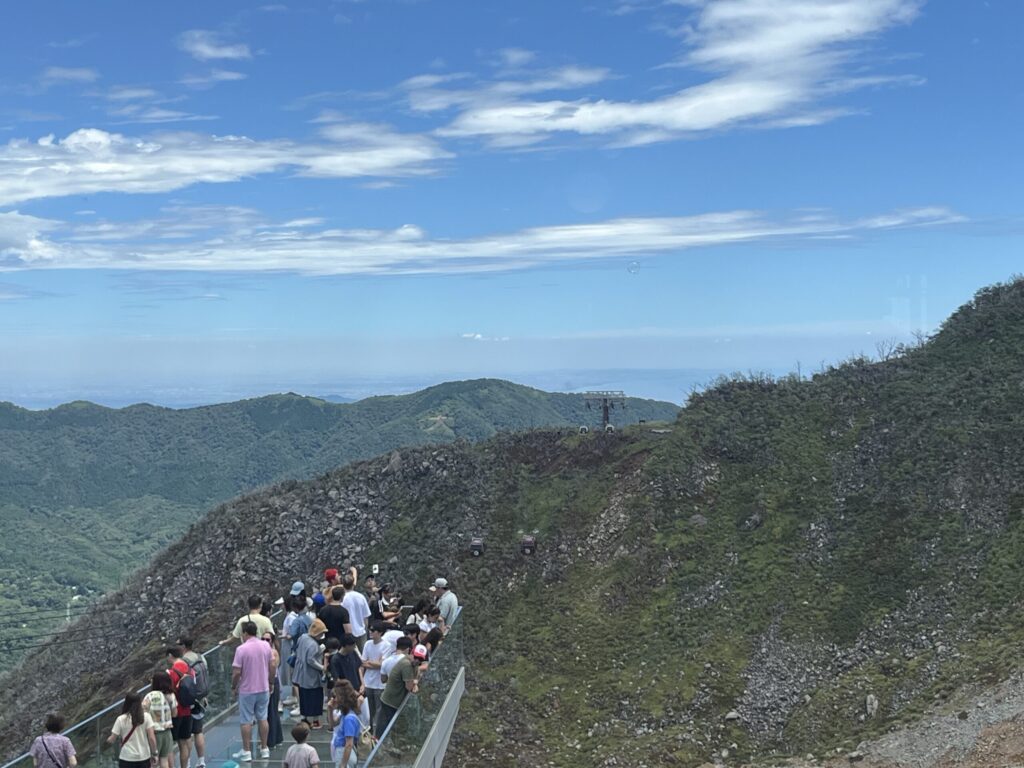
I couldn’t see Mt Fuji that day.
That was a shame, but I didn’t feel like I’d missed the whole point of Owakudani because of it.
The volcanic landscape itself was impressive enough.
The Information Area Was Surprisingly Interesting
After taking photos from the viewpoint, I went inside the information and museum area.
There were old black-and-white photographs and displays explaining the development of Owakudani, how hot spring water has been supplied from the area, and the role Eiichi Shibusawa played in its development.
I actually found it really interesting.
Do I remember most of what I learnt now?
No. Not at all.
You know that feeling when you’re reading everything in a museum thinking,
Oh, that’s interesting.
Then later that evening:
Hang on… what did I actually learn?
One thing I checked afterwards, though, is that the connection with Shibusawa wasn’t just something I’d imagined. He was involved in developing a large-scale system to supply hot spring water from Owakudani, which contributed to the development of the Sengokuhara area.
The Egg Soft Serve Was Actually Really Good
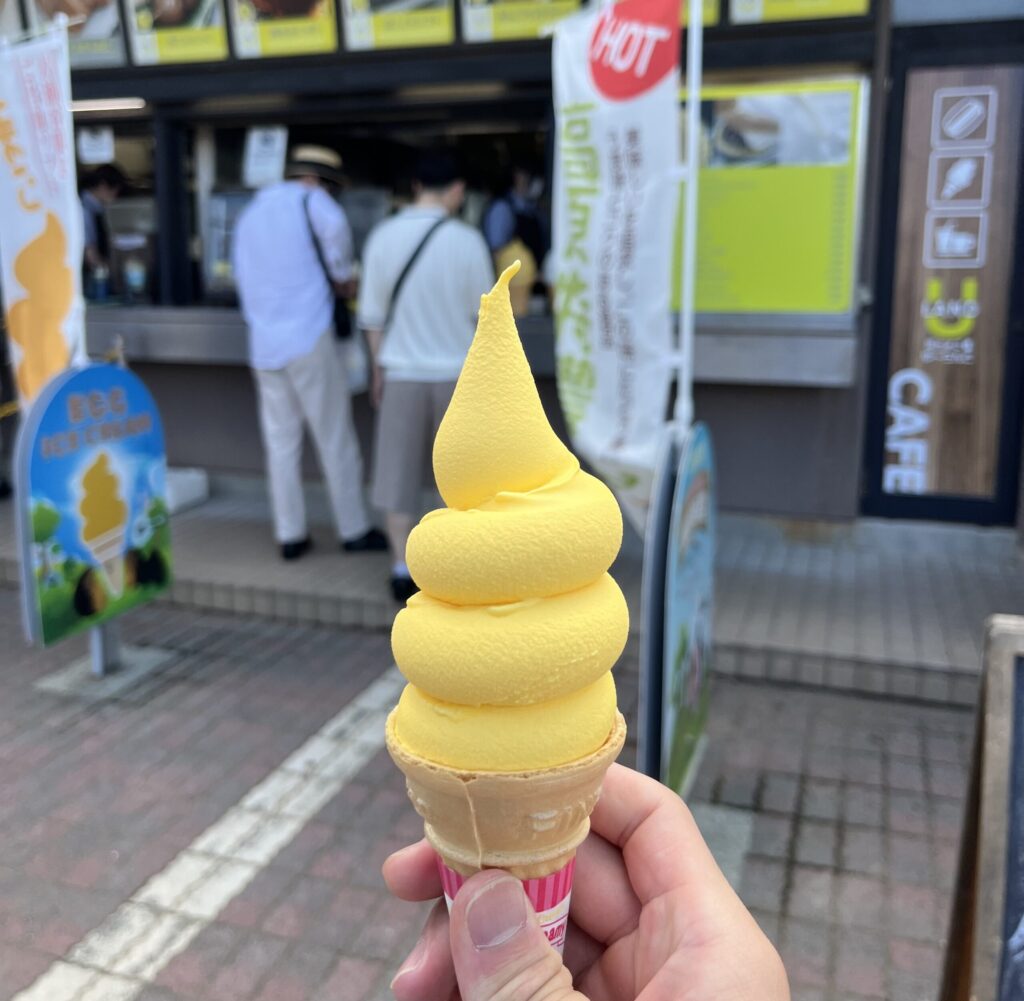
Then came something I hadn’t particularly been looking forward to:
egg soft serve.
It’s yellow, which already makes it look slightly unusual.
But it was genuinely good.
It wasn’t overly sweet, and it definitely tasted different from ordinary vanilla soft serve. There was a very slight eggy richness to it — or at least that’s what I thought I could taste.
I actually preferred it to a normal vanilla soft serve.
I’d happily have that again.
And Then, Obviously, the Black Eggs
You can’t really come to Owakudani and ignore the black eggs.
I bought a bag of four for ¥500, which is still the current official price at the time of writing. Even though there was a queue, it moved so quickly that I barely felt like I’d waited at all. The official Owakudani site also notes that queues can form but tend to move smoothly.
And the taste?
Well…
It’s still a boiled egg.
But I could smell the sulphur on it, and with a little salt, I thought it was really good.
If the sulphur smell doesn’t bother you, I actually prefer it to an ordinary boiled egg.
Maybe it was just the sulphur and dramatic black shell messing with my head, but somehow it felt more nutritious too.
It probably wasn’t.
It just felt that way.
So Why Are the Eggs Black?
The colour isn’t artificial.
The eggs are boiled for about an hour in an approximately 80°C hot spring pool. Minerals from the spring attach to the porous shells, and Owakudani’s geothermal heat and volcanic gases cause chemical reactions that turn them black.
The eggs are then steamed for about 15 minutes at roughly 100°C before being sold.
So underneath that dramatic black shell, yes, it’s still basically a boiled egg.
But eating one while surrounded by sulphur, steam and volcanic mountains makes it a lot more memorable.
And one useful thing I learnt afterwards: the genuine Owakudani black eggs aren’t sold all over Hakone. According to the official site, they’re sold at Owakudani itself, at Owakudani Kurotamago-kan and Gokuraku Chaya.
How Long Do You Need at Owakudani?
I spent about an hour and a half there, including lunch.
For what I wanted to do, that was enough.
I enjoyed the viewpoints, had lunch, looked around the information and museum area, ate the egg soft serve and bought black eggs.
Owakudani isn’t actually that large.
That was probably my biggest surprise.
I remember looking around and thinking:
Oh. Is that basically it?
But I don’t mean that negatively. I had a good time and left satisfied.
For a normal visit to the main area, I wouldn’t personally set aside half a day unless you’re deliberately taking things slowly or combining it with something else.
There’s Also a Nature Study Trail — Which I Didn’t Do
There’s one important caveat to my 90-minute visit.
I only explored the main visitor area.
I didn’t walk the separate Owakudani Nature Study Trail. In fact, I didn’t even know it existed when I went.
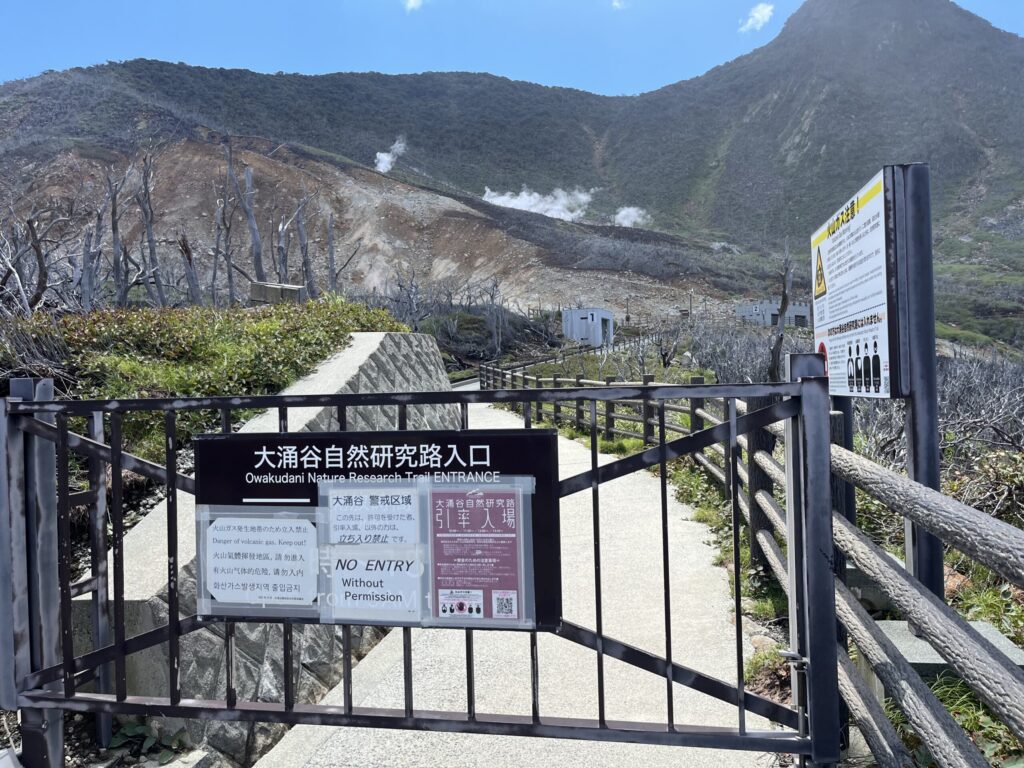
The trail takes visitors into an area that has special controls because of volcanic activity. It’s a roughly 700-metre circuit and takes about 40 minutes. Entry is in supervised groups, with four scheduled sessions a day — currently 10:00, 11:30, 13:00 and 14:30 — and a maximum of 30 people per session. An ¥800 safety contribution is currently charged, and online advance booking is required.
The official booking system shows current availability, but I couldn’t find an official rule saying that you must book by the previous day. Because places are limited, I’d simply check availability and book through the official site before you go rather than assume you’ll be able to join at the last minute.
Weather, visibility, volcanic gas levels and other safety conditions can also cause a session to be cancelled.
One other thing worth knowing: the people accompanying the group are safety monitors, not sightseeing guides, and the official site says explanations during the walk are in Japanese.
Check the official Owakudani Nature Study Trail booking page
If I visit Owakudani again, this is actually something I’d consider doing, simply because I missed it the first time.
Would I Go Again?
On my own?
Probably not.
I enjoyed Owakudani, I’m glad I went, and I think the volcanic scenery is something worth seeing once.
But once was probably enough for me.
If I came back with someone who had never been before, though, I’d happily visit again — especially if we took the ropeway this time.
That would make the second visit feel a little different.
So, Is Owakudani Worth Visiting?
Yes — especially if it’s your first trip to Hakone.
If you’re still planning your trip, here’s how many days I’d spend in Hakone.
The volcanic landscape is unlike anywhere else I visited in Hakone, the smell of sulphur hits you as soon as you arrive, and the black eggs are one of those touristy things that are actually fun to try.
Just don’t expect a huge attraction that takes all day to explore.
I spent around 90 minutes there including lunch and left perfectly satisfied.
Would I keep coming back?
Probably not.
But if a friend told me they were visiting Hakone for the first time and asked whether they should include Owakudani, my answer would be easy:
Go. See the steam. Eat the black egg.
At least once.
If Owakudani is part of a wider Hakone trip, my complete Hakone travel guide can help you plan the rest.