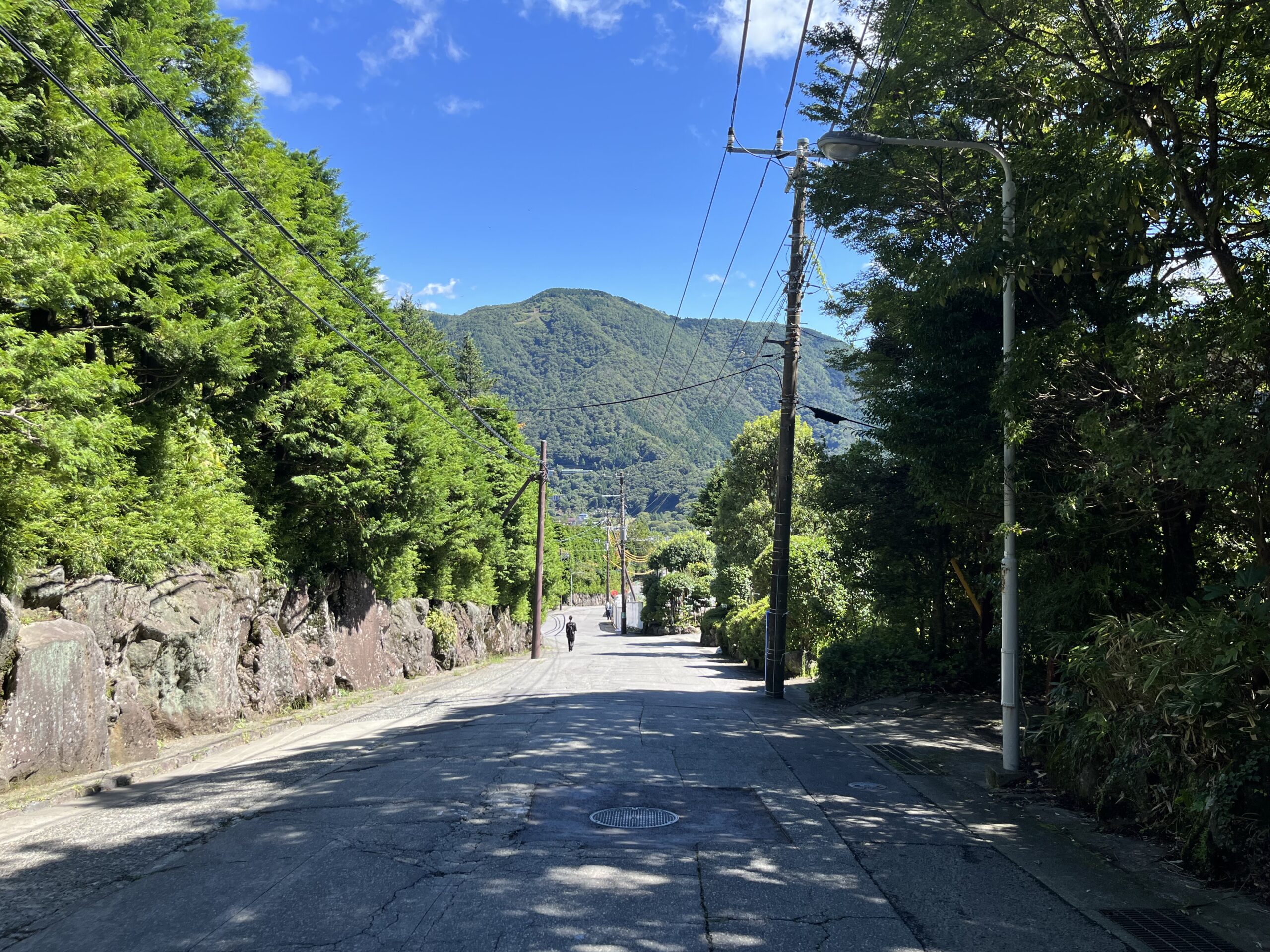

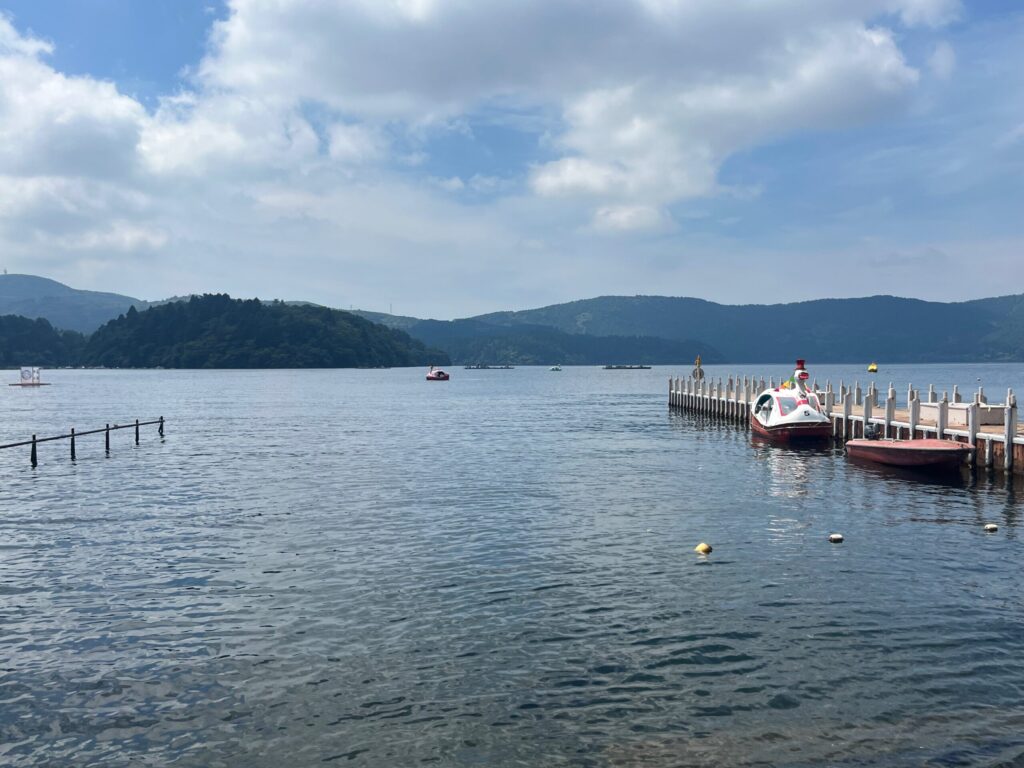
Hakone Shrine and Lake Ashi are probably two of the first places that come to mind when people picture Hakone.
The red torii standing in the lake. Mount Fuji behind the water. Sightseeing boats crossing Lake Ashi. The old shrine hidden amongst enormous cedar trees.
But what is it actually like to visit?
I decided to explore the area almost entirely on foot, starting at Motohakone and walking from Hakone Shrine along Lake Ashi towards Hakone Sekisho and the Hakone Ekiden finish area.
I arrived at Motohakone at around 10:45 am. From there, the whole outing took me roughly two and a half hours.
I should point out, though, that I walk fairly quickly and don’t take many breaks. If you want to explore at a more relaxed pace, I’d give yourself around three to three and a half hours — or about four if you also want to take a sightseeing cruise.
Here’s what the walk was actually like.
My Walking Route Around Lake Ashi
My route was roughly:
Motohakone → Hakone Shrine → Heiwa no Torii → Lake Ashi → Onshi-Hakone Park → Hakone Sekisho → Hakone Ekiden finish area
I took a bus from Kowakien and got off at Motohakone at around 10:45 am.
From there, I headed first towards Hakone Shrine.
The nice thing about this route is that you don’t have to keep jumping on and off buses. Once you’re at Motohakone, quite a lot of the area can be explored simply by walking.
And for me, walking turned out to be one of the best parts of the day.
Hakone Shrine — The Cedar Trees Impressed Me More Than I Expected
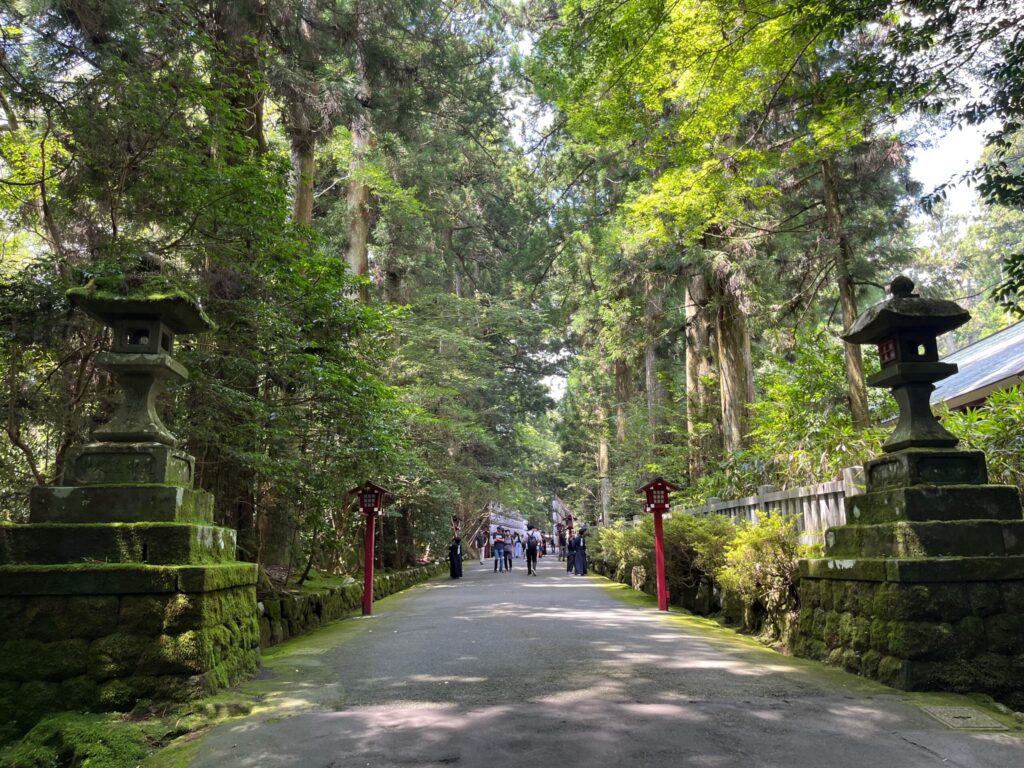
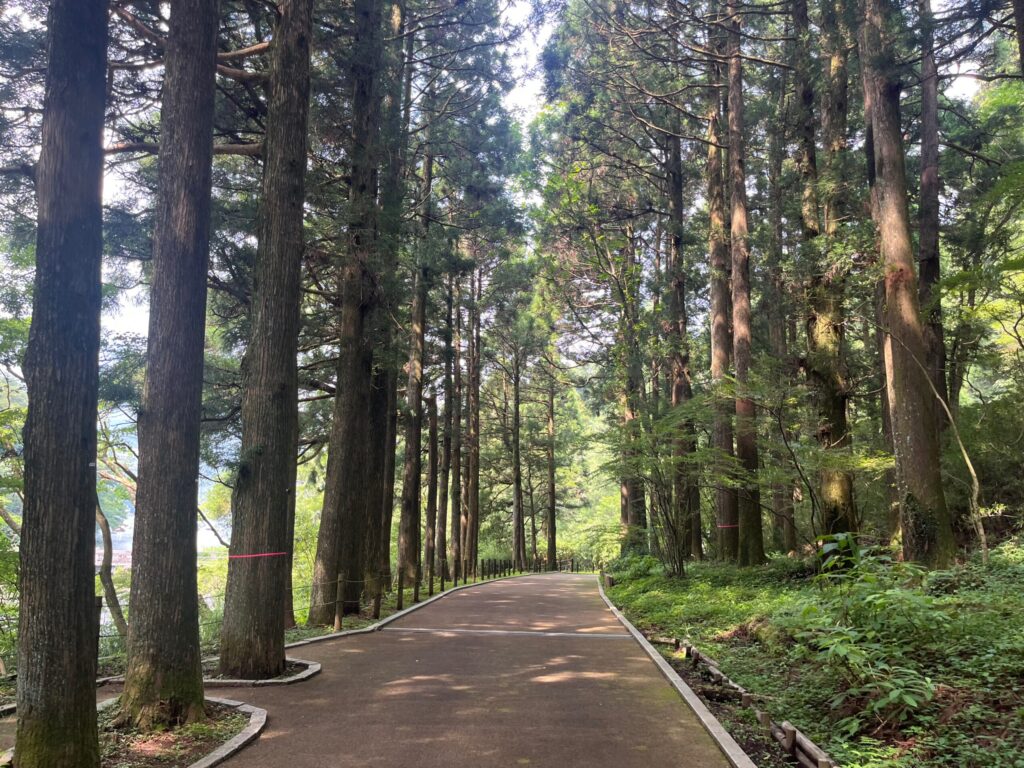
Hakone Shrine feels completely different once you step away from the road and into the trees.
The approach is lined with enormous cedars, standing almost perfectly along the path and creating what felt like a tunnel through the forest.
What stayed with me most was the atmosphere underneath them.
It felt cooler, quieter and somehow more solemn.
The effect became even stronger when I reached the stone steps leading up towards the main shrine. The cedar trees standing on either side were huge. Their trunks were thick and powerful, and simply looking at them gave the place a sense of age that is difficult to get from a photograph.
The main approach has around 90 stone steps, surrounded by these old cedars.
I spent about 40 minutes at the shrine altogether, taking my time walking around the grounds and paying my respects.
There’s also somewhere to sit and take a break, as well as a shop where you can pick up drinks and small Japanese sweets. I saw quite a few people relaxing there after visiting the shrine.
I was also surprised by how many European visitors I came across. Hakone is obviously an international destination, but seeing so many overseas travellers deep inside a shrine surrounded by Japanese cedar forest was still quite striking.
The Famous Torii — I Didn’t Queue for the Photo
Then there’s the famous Heiwa no Torii, standing in Lake Ashi.
This is probably one of the most photographed spots in Hakone.
And yes, when I got there, there was a queue.
A very long one.
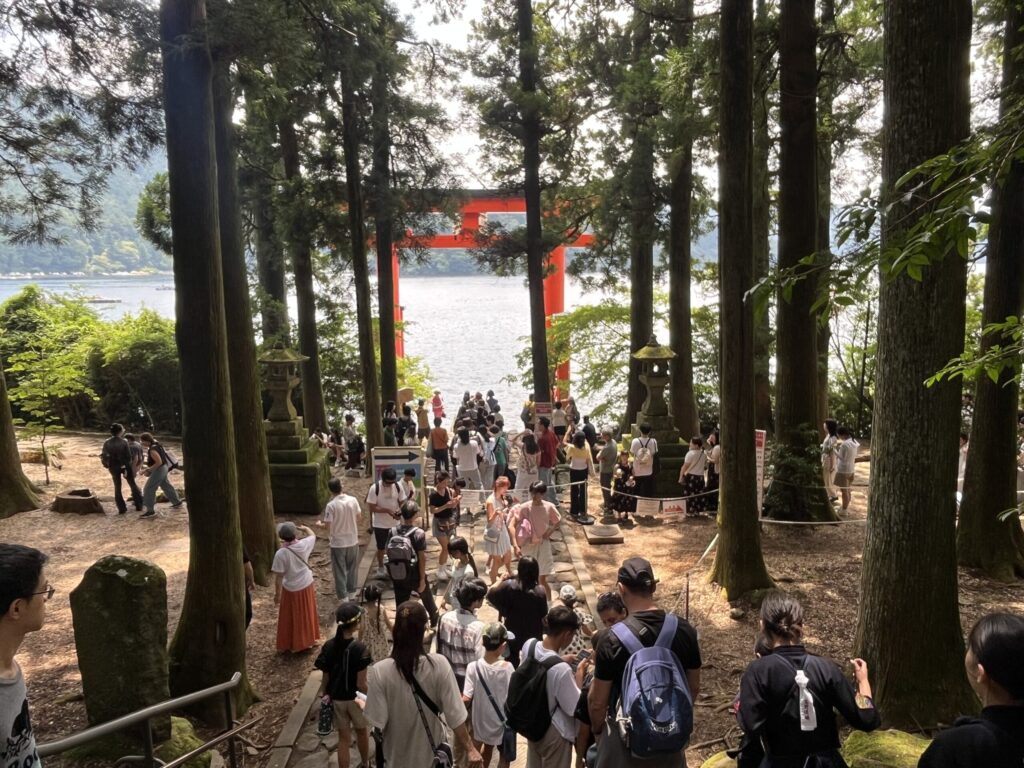
People were waiting for their turn to stand underneath the torii and take what has become one of the classic Hakone photographs.
I took one look at the queue and thought: nope.
Perhaps I’m the wrong person to judge because I rarely put myself in my travel photos. I’m much more interested in photographing the landscape itself.
I’d come down to the lake because I wanted to see the torii against Lake Ashi, not because I particularly needed a photograph of myself standing underneath it.
So I took a few photos from further away and moved on.
I’ll admit that I felt slightly conflicted about the whole thing. Hakone Shrine is still a sacred place, and seeing one part of it turn into something resembling an Instagram photo queue felt a little strange to me.
But that’s purely my personal reaction.
People enjoy travelling in different ways, and if getting that photograph is part of your trip, fair enough. Just be prepared to wait if it’s busy.
For me, the view was enough.
The torii itself was built in 1952, and the plaque reading “Peace” was added in 1964. So although social media has made it enormously famous, it existed long before Instagram did.
Walking Along Lake Ashi
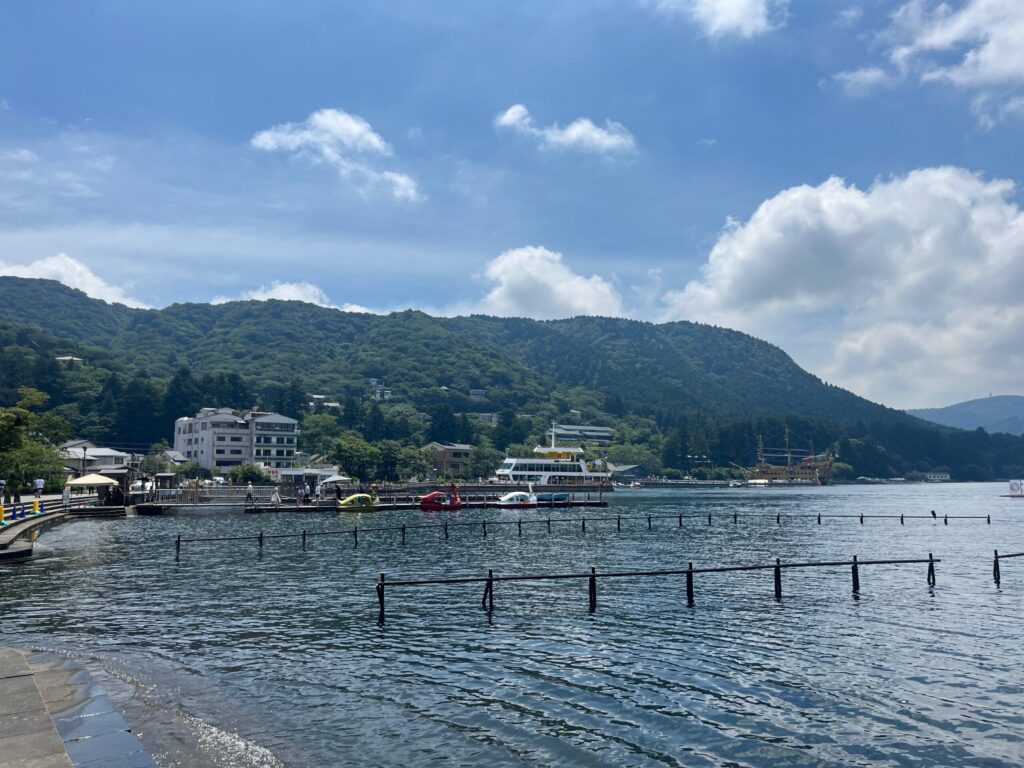
After leaving the shrine and the torii, I continued along Lake Ashi towards Hakone Sekisho.
I spent around 20 minutes wandering around the lakeside before continuing on.
This was where the day became less about ticking off famous sights and more about simply walking through Hakone.
Lake on one side. Mountains all around. Sightseeing boats crossing the water.
On a clear day, you may also get Mount Fuji in the background.
I did not.
Not even slightly.
Onshi-Hakone Park — And No Mount Fuji
On the way towards Hakone Sekisho, I stopped at Onshi-Hakone Park.
The park sits on a peninsula extending into Lake Ashi and is known for views across the lake towards Mount Fuji.
At least, that’s what you’re supposed to see.
The weather had other ideas.
It was cloudy, and Mount Fuji was completely hidden.
This is something worth remembering when planning a trip to Hakone:
Mount Fuji doesn’t care about your itinerary.
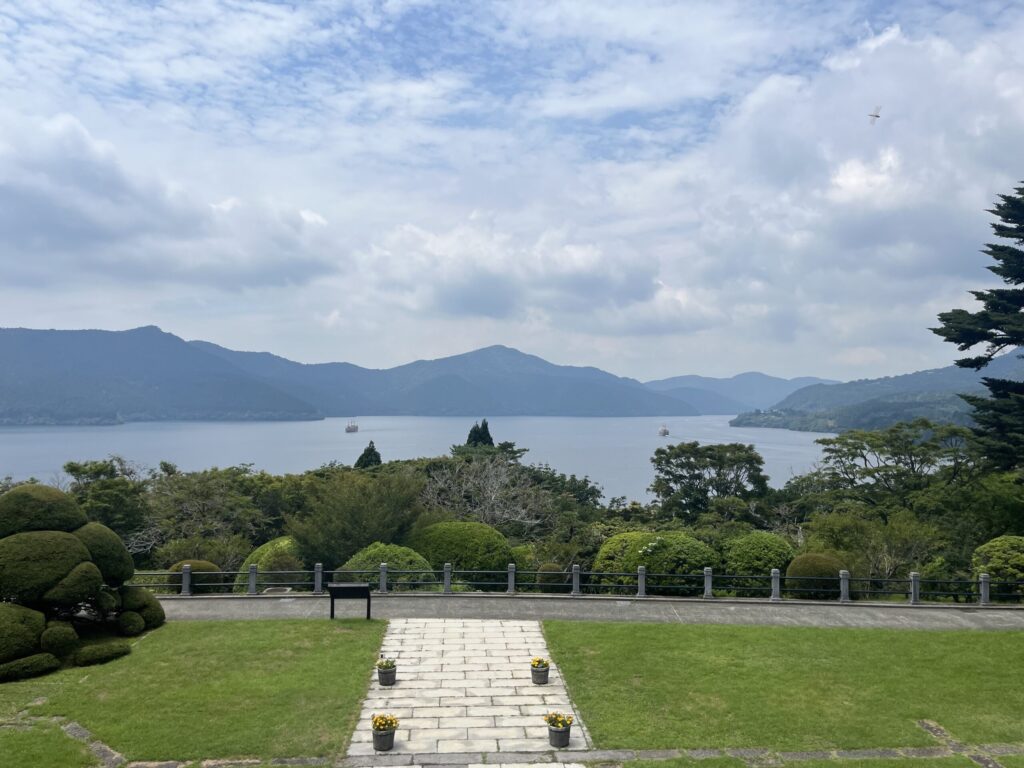
You can choose the right viewpoint, arrive at the right time and still see absolutely nothing if the clouds decide not to cooperate.
Was the park pointless without Fuji?
No.
I still enjoyed walking around, and the views across Lake Ashi and the surrounding mountains were worth stopping for.
But yes, I would have loved to see Fuji.
Maybe next time.
Do You Need to Take the Hakone Sightseeing Cruise?
I didn’t.
And I didn’t feel that I’d missed an essential part of the day.
The sightseeing boats certainly look fun, particularly on a clear day. Standing out on deck with the wind coming across the lake and the mountains around you sounds rather good.
But on this particular visit, the ticket felt a little expensive for me, and I was perfectly happy exploring on foot.
Would I take one next time?
Maybe.
If the weather were beautiful, I had a bit more money to spend and I fancied a boat ride, then why not?
But if I came back alone under similar circumstances, I’d probably walk again.
I don’t think you need to treat the cruise as compulsory. See how you feel on the day.
Walking Through Hakone Sekisho
Current Note (September 2026): Hakone Sekisho is currently undergoing restoration and maintenance work. Some areas, including the Kyoguchi Gate and Sotoya Bansho, cannot be fully viewed while the work is under way. The site remains open, but if Hakone Sekisho is an important part of your visit, I’d recommend checking the latest information on the official website before you go.
Eventually I reached Hakone Sekisho, the reconstructed checkpoint on the old Tokaido road.
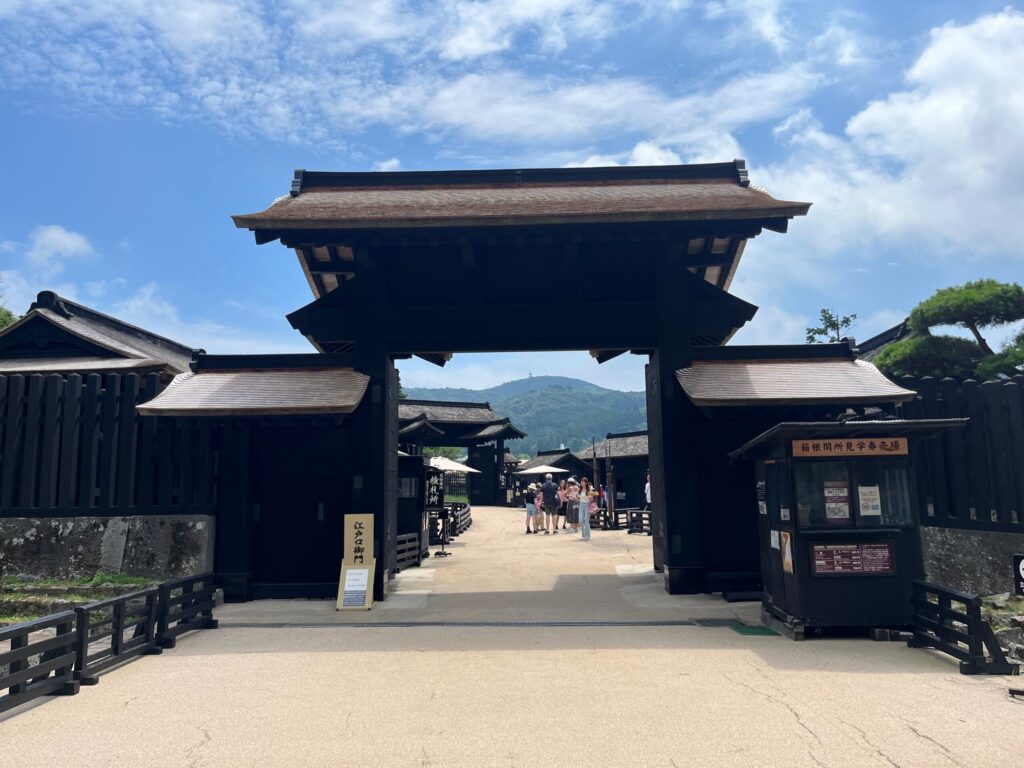
During the Edo period, checkpoints like this controlled movement along major routes, and Hakone occupied an important position on the road between Edo and Kyoto.
The buildings you see today are reconstructions based on archaeological excavations and historical documents, with the restored checkpoint fully opened to the public in 2007.
I entered and walked through the reconstructed checkpoint.
I didn’t spend hours studying every exhibit. For me, it was more about walking through the space, taking photographs and trying to imagine what it would have felt like when travellers actually had to pass through here.
And that was enough to make it interesting.
Hakone is very easy to think of simply as hot springs, mountains and a weekend escape from Tokyo.
Places like the Sekisho remind you that people have been crossing these mountains for centuries — and that travelling through Hakone once meant something very different from catching a bus with Google Maps open on your phone.
The Hakone Ekiden Finish Line Meant More to Me Than I Expected
After the checkpoint, I continued towards the finish area of the Hakone Ekiden.
If you’re visiting Japan from overseas, this might mean absolutely nothing to you.
For many Japanese people, though, the Hakone Ekiden is part of New Year.
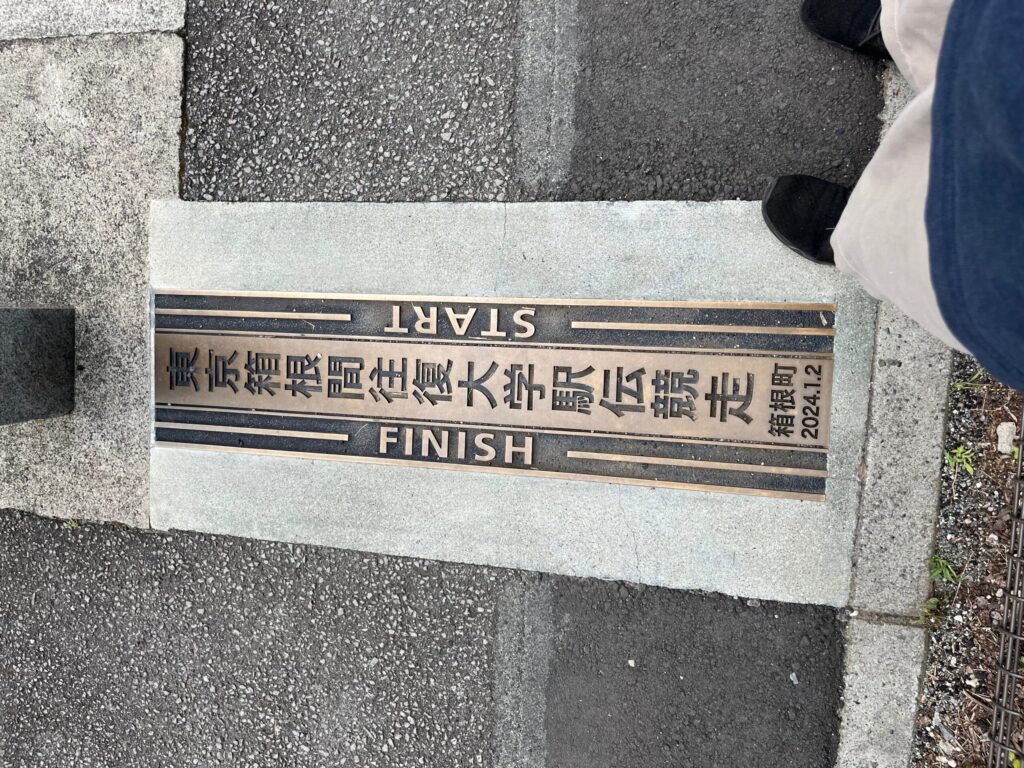
It’s a university relay race between Tokyo and Hakone, and I grew up watching it on television with my family during the New Year holidays.
The final section of the first day is particularly memorable.
The fifth runner has to climb through the mountains of Hakone, and runners who become especially famous for extraordinary performances on this mountain section have sometimes been nicknamed Yama no Kami — “God of the Mountain.”
The fifth leg is 20.8 kilometres long and climbs to the highest point on National Route 1, at roughly 874 metres above sea level, before descending towards the finish.
Watching someone run through those mountains on television is impressive.
Walking around Hakone yourself makes it slightly ridiculous.
I’d already experienced just how steep some of these roads are, so standing near the finish and thinking about runners charging up from below gave me a completely different appreciation for what they do.
I also remembered watching this exact part of the race on television — the scenery changing as the runners approach the finish and that feeling of, right, they’re nearly there now.
So when I finally stood there myself, I got rather more excited than I expected.
For an overseas visitor who has never heard of the race, it probably won’t have the same emotional pull.
But it’s a small glimpse into something that is very familiar to many Japanese families.
I Wanted to Try Wakasagi Before Leaving
There was one more thing I wanted before finishing the walk: wakasagi, or Japanese smelt.
I happened to find a restaurant serving it near the lake, so I stopped for some.
The fish itself was delicious, particularly as tempura.
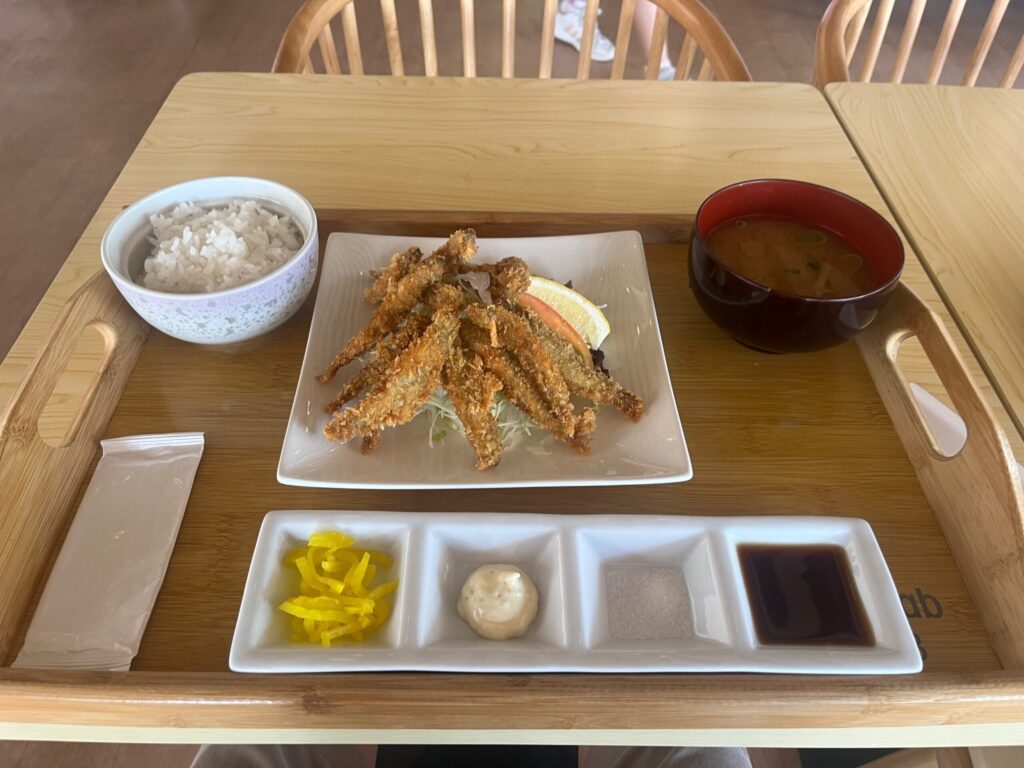
My experience with the service, however, wasn’t quite as good. The member of staff was having what appeared to be a private phone conversation between serving customers, which I found rather off-putting.
The food was good, but personally I’d try somewhere else next time.
There are other places serving wakasagi around Lake Ashi, so I wouldn’t choose a restaurant based solely on my visit. The important discovery for me was the fish itself.
That, I’d happily eat again.
How Much Time Do You Need for Hakone Shrine and Lake Ashi?
I completed this route in roughly two and a half hours.
But I wouldn’t necessarily use my pace as your benchmark.
I walk a lot, tend to walk quickly and don’t stop for particularly long breaks.
For most visitors, I’d suggest around three to three and a half hours if you want to visit Hakone Shrine, walk along Lake Ashi, explore Onshi-Hakone Park, visit Hakone Sekisho and reach the Ekiden finish area without rushing.
If you also want to take the sightseeing cruise, have a long lunch or spend more time taking photographs, around four hours would be more comfortable.
You also don’t necessarily have to walk all the way back afterwards. Depending on your onward journey, you can use a bus from the Hakone-machi side rather than retracing the entire route.
Is Hakone Shrine and Lake Ashi Actually Worth Visiting?
For me, yes.
Not because of one particular Instagram photograph.
What makes this part of Hakone worth visiting is how much is packed into a relatively small area.
You have Hakone Shrine sitting amongst enormous cedar trees. Lake Ashi surrounded by mountains. The possibility — weather permitting — of seeing Mount Fuji. The old Hakone checkpoint connecting the area with Japan’s Edo-period history. Even the Hakone Ekiden gives the landscape another layer if you know the race.
And you can experience much of it simply by walking.
The shrine was probably the most atmospheric part for me. There was something powerful about those enormous trees, the stone steps and the red shrine buildings sitting quietly amongst them.
Then you step back out towards the lake and Hakone opens up again.
So if this is your first trip to Hakone, I wouldn’t skip the Motohakone and Lake Ashi area.
Just don’t build the whole day around getting that perfect Mount Fuji photograph.
He might not turn up.
If Lake Ashi is only one part of your trip, my complete Hakone travel guide covers where to see and how to get around.
Want to read more about my time in Hakone?
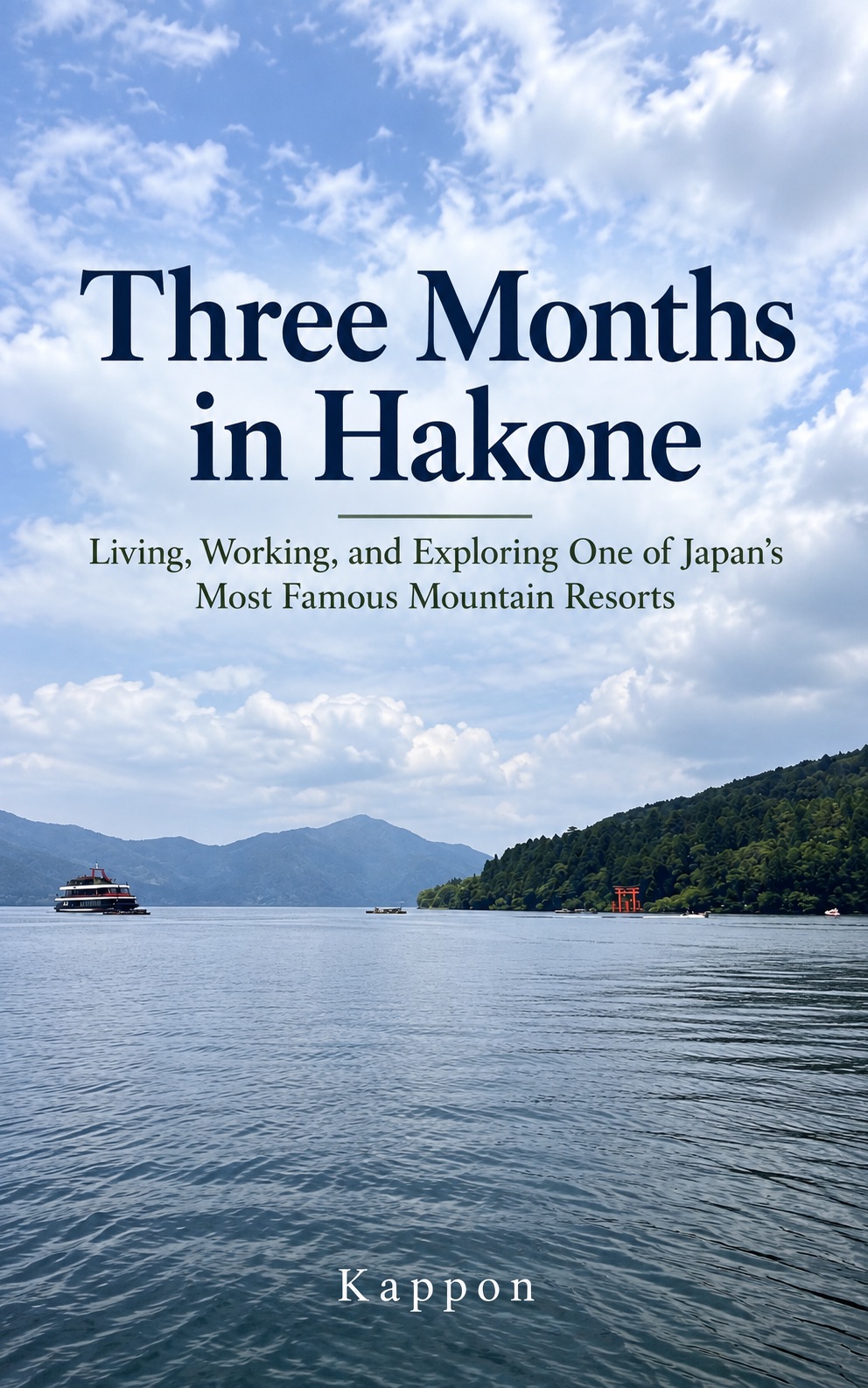
I lived and worked in Hakone for almost three months, exploring the area whenever I had a day off. I ended up turning that experience into a short Kindle book, Three Months in Hakone.
Read Three Months in Hakone on Amazon →