
Hakone-Yumoto is where many people begin their trip into Hakone, but it can be tempting to treat it as little more than a station on the way to somewhere else.
I’d been here once before, but only to visit Sounji Temple. This time, I actually gave myself time to wander around properly, try some of the food along the shopping street and sit down for lunch.
What I found was a surprisingly compact little mountain town. You don’t need a full day here. In fact, I think around three hours is enough to enjoy Hakone-Yumoto without rushing — including lunch, a bit of food hopping and a walk beyond the main shopping street.
And that last part is worth doing. The shops are fun, but some of my favourite views came after stepping away from them.
What Is Hakone-Yumoto Actually Like?

The first thing you’ll notice after leaving Hakone-Yumoto Station is the shopping street.
Shops and restaurants line both sides of the road, selling sweets, snacks and all sorts of Hakone souvenirs. It’s actually much more compact than I expected. If you simply walked to the end and back without stopping anywhere, I reckon you could do it in about 20 minutes.
Of course, that rather defeats the point.
Half the fun is stopping whenever something catches your eye. And because there are shops on both sides, there’s plenty to look at on the way back too.
But what made Hakone-Yumoto feel like Hakone to me wasn’t really the shops. It was the mountains.
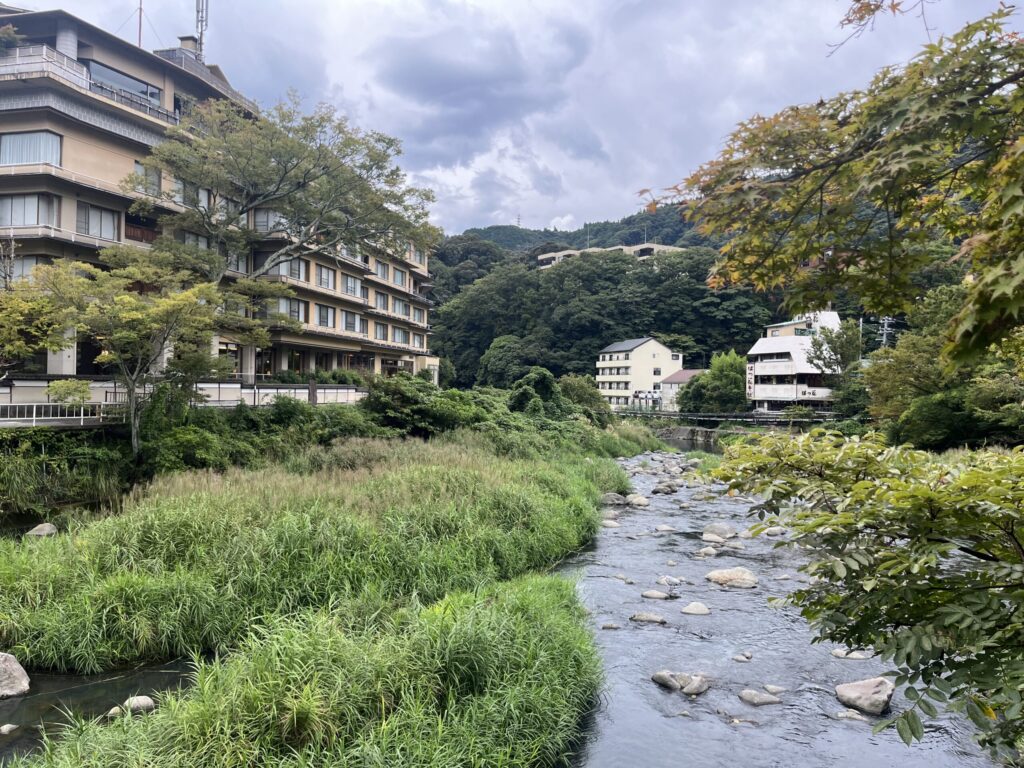
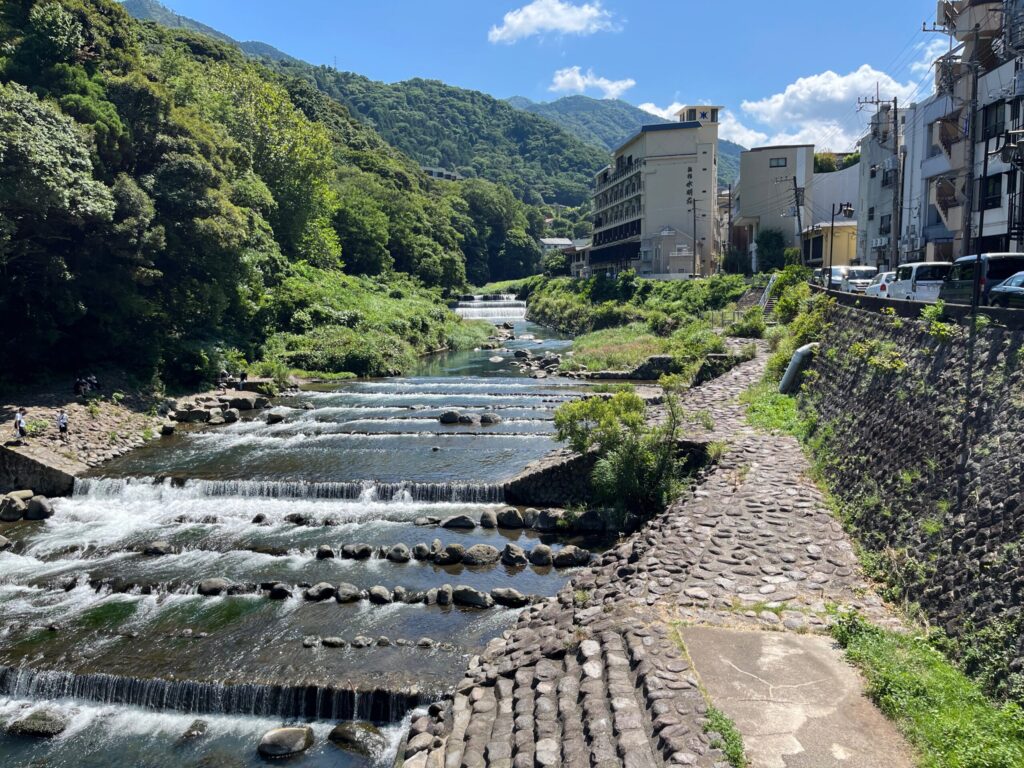
Wherever I walked, I could see mountains at the end of my view, surrounding the town. From one of the bridges over the Hayakawa River, I looked upstream and saw old ryokan sitting amongst the greenery, with the clear river running down from the mountains below them.
That was probably the moment when Hakone-Yumoto made the most sense to me. You really are in a mountain town.
How Long Do You Need in Hakone-Yumoto?
I’d allow around three hours if you want to explore Hakone-Yumoto at a relaxed pace.
The shopping street itself isn’t particularly long, so you don’t need hours just to walk around it. Three hours gives you enough time to stop for a few snacks, have lunch and cross the Hayakawa River for a slightly longer wander.
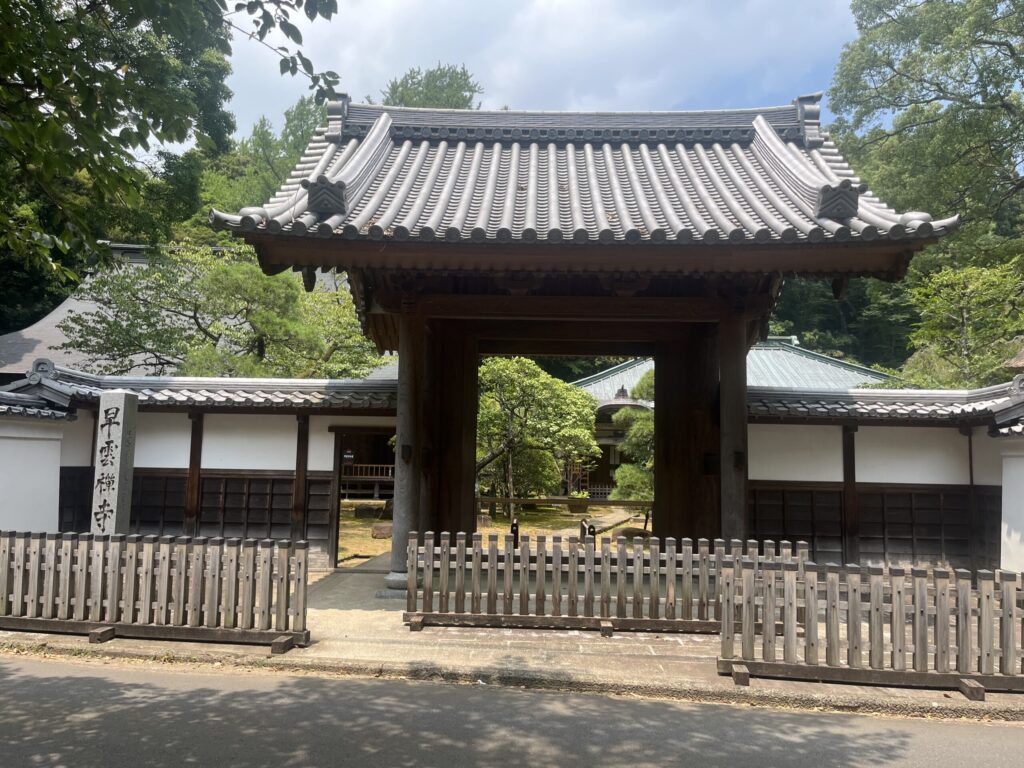
You can also make your way towards Sounji Temple, which I visited on my first trip to Hakone-Yumoto. Founded in 1521, the temple is associated with Hojo Soun and is only a short distance from the station area.
If you’re on a tight itinerary, you could certainly spend less time here. But if you have around three hours, I think that’s enough to enjoy the town rather than simply pass through it.
What I Ate in Hakone-Yumoto
Food was one of the main reasons I wanted to explore the town properly this time. There are plenty of things competing for your attention along the shopping street, but these are the ones I actually tried.
Honey Cheese Tart
This was one of my favourites.
The Honey Cheese Tart from Grande Rivière Hakone had a crisp tart shell with a soft, creamy cheese filling. It reminded me a little of a rare cheesecake, with the honey adding sweetness without making it feel too heavy.
It’s small enough that you can easily eat one while walking around and still have room for everything else you inevitably end up buying afterwards.
If I were choosing something sweet to try again, this would be high on the list.
Ikinari Dango

I’d recommend this one too.
Ikinari dango is a much more traditional-looking snack, and I liked the contrast of the different textures: sweet potato, red bean paste and the chewy dough around them.
Mine was served warm, which made it even better.
Compared with the cheese tart, it feels much more Japanese, so if you’re visiting from overseas and want to try something different from the usual cakes and ice creams, this is a good one to look out for.
Hakone Teramisu

Hakone Teramisu is difficult to miss. The soft-served tiramisu has become one of the recognisable sweets around Hakone-Yumoto.
I love tiramisu, so perhaps my expectations were a little too high.
It was definitely good — smooth, creamy and easy to eat — but I personally wanted a stronger coffee flavour and a little more bitterness.
So I wouldn’t tell you to avoid it at all. If you see it everywhere and wonder what the fuss is about, give it a try.
For me, though, the Honey Cheese Tart and Ikinari Dango were more memorable.
Lunch at Yubadon Naokichi

For lunch, I went to Yubadon Naokichi, a small restaurant near Hakone-Yumoto Station specialising in yuba.
Yuba is the thin layer that forms on the surface when soy milk is heated. I’d eaten yuba before, but I’d never had a meal where it was basically the main actor.
I arrived sometime after 1 pm and still had to wait for around 40 minutes.
Rather than standing around doing nothing, I went back towards the shopping street and wandered around while I waited. So if you’re given a waiting time, there are worse places to kill 40 minutes.
The meal was all about yuba in different forms.
What I liked was how delicate everything was. Yuba doesn’t hit you with a strong flavour. It’s much more about the soft texture, the gentle soybean taste and how it works with the other ingredients.
The yuba don was particularly comforting — warm, soft and simple.
If you’ve never tried yuba before, this is probably a more interesting lunch than simply going for another bowl of ramen or soba that you could find almost anywhere else in Japan.
Just bear in mind that my 40-minute wait was after 1 pm, so I wouldn’t assume that arriving slightly after the usual lunch rush means you’ll walk straight in.
Don’t Stop at the Shopping Street
If you have enough time, I’d recommend walking beyond the row of food and souvenir shops.
Crossing the Hayakawa River gives you a better sense of where Hakone-Yumoto actually is. From the bridge, look upstream.
The mountains rise behind the town, the river comes down between them, and traditional-looking ryokan appear amongst all the green.
The shopping street could almost belong to any popular Japanese tourist town.
That view couldn’t.
You can continue walking towards Sounji Temple before looping back towards the station. It doesn’t turn Hakone-Yumoto into an all-day sightseeing destination, but it makes the visit feel much more complete.
Hakone-Yumoto or Gora — Where Would I Stay?
If it were my first trip to Hakone and I were travelling with luggage, I’d personally choose Hakone-Yumoto over Gora as my base.
There are a few reasons.
First, Gora is steep. And I mean properly steep.
Dragging a suitcase — or carrying a heavy backpack — uphill from Gora Station towards some of the accommodation can be hard work. Hakone is mountainous, and Gora makes absolutely no attempt to hide that fact.
Hakone-Yumoto, meanwhile, is the gateway to the rest of Hakone. The Hakone Tozan Railway runs directly from Hakone-Yumoto to Gora, taking about 40 minutes.
The train itself is worth riding at least once. It climbs through the mountains and uses switchbacks along the way, so the journey is part of the Hakone experience rather than simply transport from A to B.
But once I’d experienced it, I wouldn’t personally want to add another 40-minute train journey every time I wanted to get back towards Hakone-Yumoto.
There are also noticeably more places to eat and buy souvenirs around Hakone-Yumoto Station than around Gora Station.
That doesn’t mean Gora is a bad place to stay. If you’ve found a ryokan there that you really want to experience, or staying higher in the mountains is part of the appeal, that could easily outweigh the inconvenience. I’ve written separately about what staying in Gora is actually like.
But for convenience — particularly on a first visit with luggage — I’d pick Hakone-Yumoto.
So, Is Hakone-Yumoto Worth Visiting?
Yes, but I don’t think you need to give it an entire day.
That’s actually one of the things I like about it.
Give yourself around three hours. Walk along the shopping street. Try whatever looks good. Have lunch. Cross the river. Look back towards the mountains. If you have time, wander over to Sounji Temple.
Then carry on into Hakone.
My first visit to Hakone-Yumoto was basically just a stop for the temple. On my second visit, after finally spending some proper time walking around, I realised there was more to the town than I’d given it credit for.
Not enough to fill an entire day, perhaps.
But certainly enough to make it worth getting off the train.
If you’re planning a wider trip around the area, I’ve put everything together in my complete Hakone travel guide.
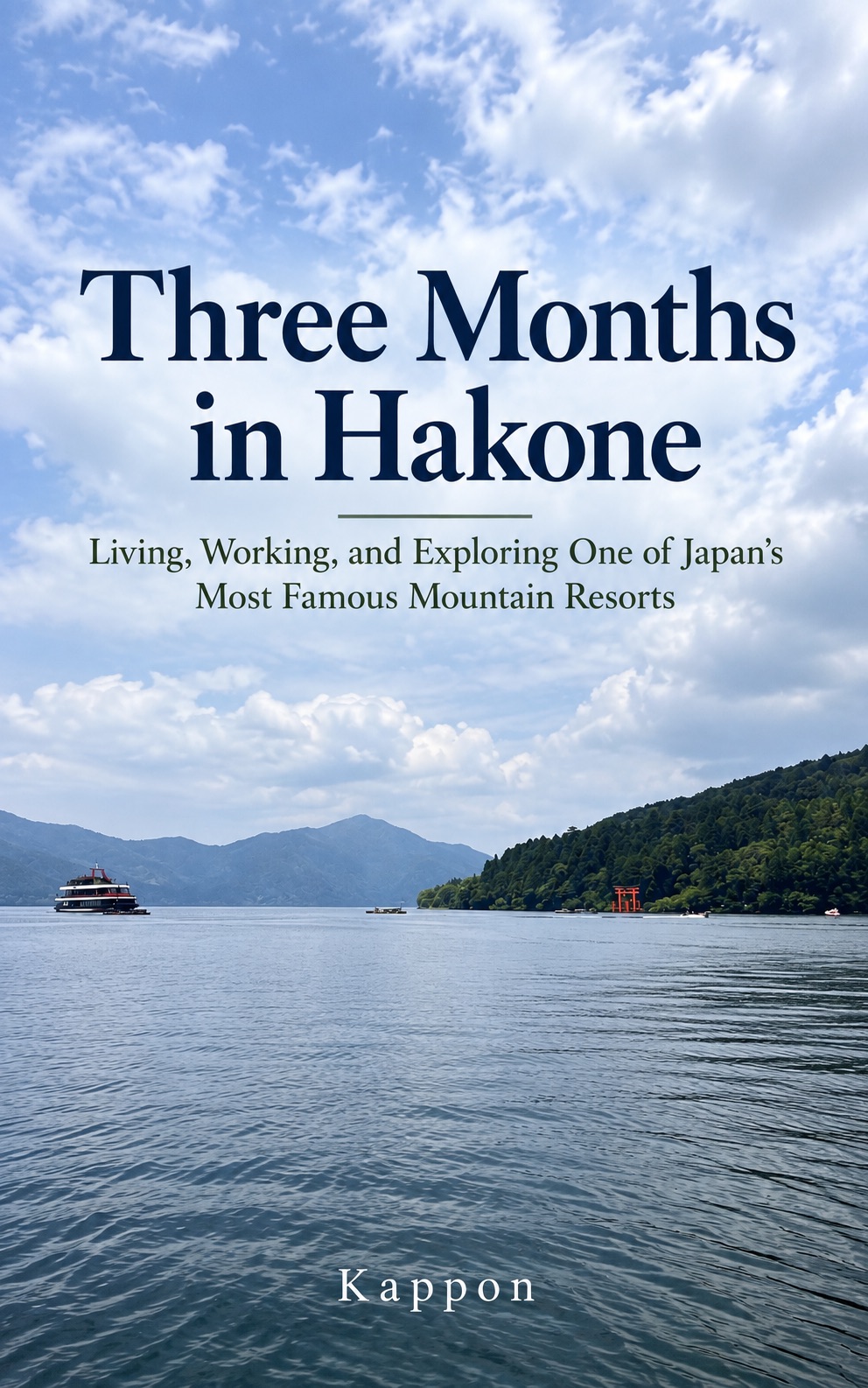
Want to read more about my time in Hakone?
I lived and worked in Hakone for almost three months, exploring the area whenever I had a day off. I ended up turning that experience into a short Kindle book, Three Months in Hakone.
Read Three Months in Hakone on Amazon →