
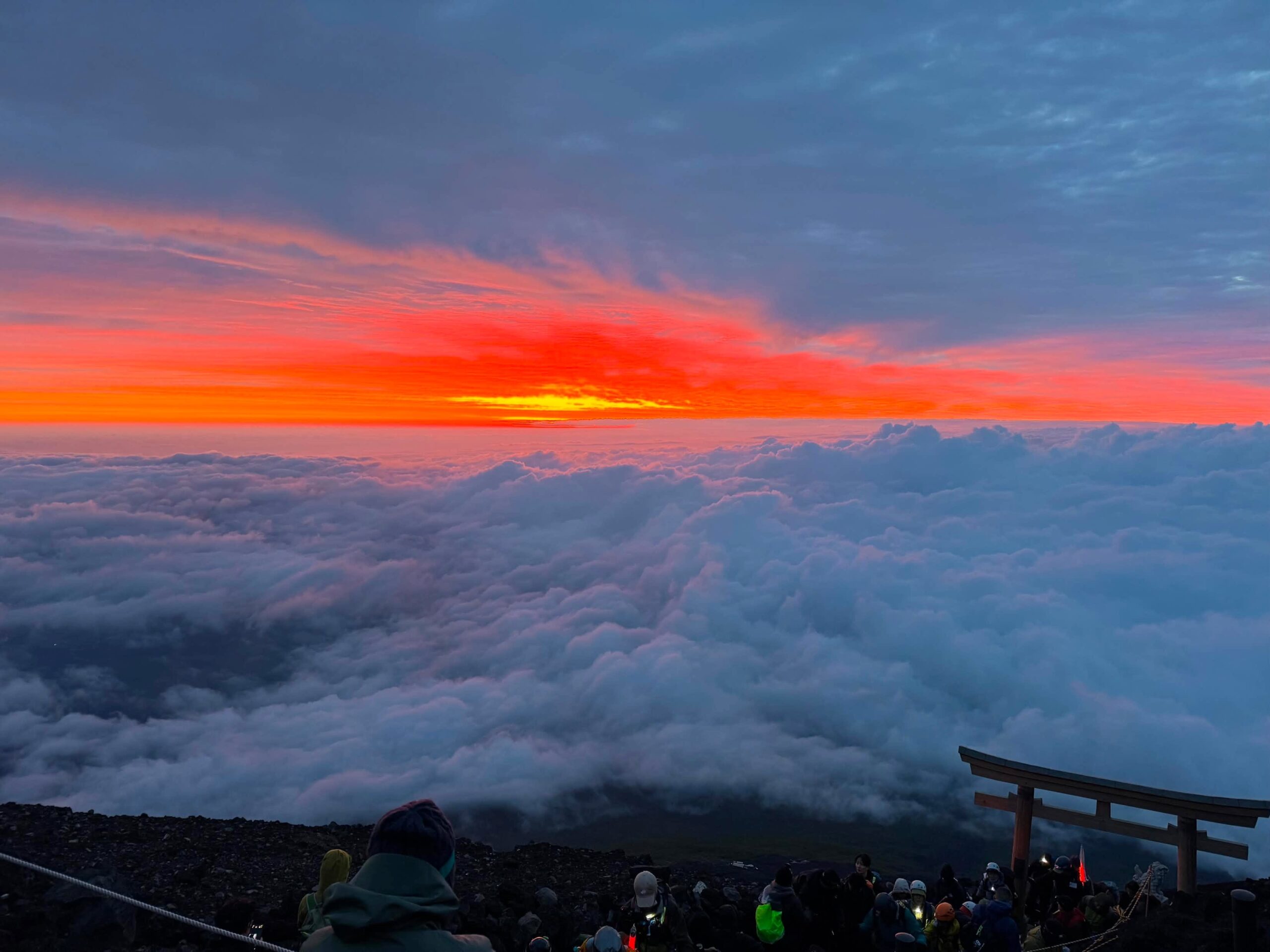
On the 4th of July, I was standing on the peak of Mt. Fuji. It was a brilliant, memorable, and invaluable moment to have in life. Standing at the top, I was deeply filled with a sense of achievement.
But let’s be honest, getting there was a beautiful nightmare.
If you are a beginner thinking about taking on Japan’s highest peak, here is the raw, unfiltered truth of what it’s actually like to climb Mt. Fuji.
Don’t forget to make sure to check the official website before starting climbing to know what you should bring and wear, and what the weather can be. :Mt.Fuji Climbing Official Website
1. The Journey Begins: Tokyo to the 5th Station
My friend and I decided to tackle the mountain on July 3rd. Since we were beginners, we joined a guided tour—the Jamjam Tour—which walked us through the entire process.
We gathered in Tokyo at 10:00 AM, hopped on the tour bus, and arrived at the famous Mt. Fuji 5th Station by 3:00 PM.
Acclimatizing at the 5th Station (Elevation: 2,305m)

The 5th station is the most popular starting point for the Yoshida Route. Once the bus dropped us off, we spent 40 minutes just sitting around.
When you are hiking a mountain this tall, taking time to adjust to the thinner air is absolutely critical for survival.
At 4:00 PM, our group of around 20 beginners started marching. Following the instructions of our two guides, we moved in a steady rhythm: step, pause, listen to their advice, and repeat.
2. The Reality of the Climb: Altitude Sickness Kicks In

As we headed toward the mountain lodge at the 7th Station, reality hit the group hard.
Some members developed severe altitude sickness and were actively throwing up. Others suffered from intense leg cramps. Because of this, our group had to take breaks every now and then.
At this stage, fortunately, I was still full of energy. I didn’t feel any pain or symptoms from the sickness at all. I was just focused on tomorrow’s sunrise.
3. A Nightmare at Hanagoya Hut: The Human Storm
After two hours of climbing, we arrived at Hanagoya, a mountain hut at the 7th Station (2,700m). This was where we were supposed to get some dinner, take a little nap, and prepare for the midnight hike to the summit.
The lodge staff served us a nice, warm bowl of Gyudon (beef bowl) and Miso soup. We had about three and a half hours of downtime before heading out again.

What a Nightmare Before the Harsh Climb!
Everyone laid down in their sleeping bags, and I tried to do the same. A moment later, a huge snore hit me from the person right next to me. It sounded like a storm. Instantly, I figured out I wouldn’t be able to sleep tonight.
It echoed throughout the entire room like repeated bombs. That guy kept snoring the entire time, and I couldn’t sleep for even a single minute. I could have sworn nobody else in that room slept either.
Looking back, I should’ve brought a pair of earplugs or at least noise-canceling earbuds to muffle the sound a bit. Honestly, I’m not even sure if they would have worked against that level of noise!
At 9:50 PM, it was time to get up and get ready for the night hike. I felt completely drained and worn out before we even started. But looking around, everybody else looked just as tired. We put our headlamps on our helmets and started climbing into the dark.
4. The Midnight Hike: Beating the Darkness (and Dropping My Light)
The trek from the 7th to the 8th station is incredibly jagged and rocky. Personally, I actually liked this part. The spikes of my hiking shoes could hook onto the rocks nicely, meaning I didn’t slip at all.
Then, disaster struck. While taking off my jacket at a rest stop, I accidentally dropped my headlamp down the mountain.
It was a massive shock because you absolutely need a light to walk through the pitch blackness. For the rest of the climb, I had to rely entirely on the beams from the person in front of me and behind me. I had to be meticulous, staring carefully at the exact spots where their headlights flashed. Thank God, I managed to make it work.
Why the Yoshida Route is Best for Beginners
One great thing about the Yoshida Route is the sheer number of mountain lodges. You can drop by them to buy snacks, drinks, or hot soup. It’s widely considered the easiest route for this reason.
Tip: To warm yourself up in the freezing night air, I highly recommend sipping hot miso soup at the huts. It helps replenish the minerals and salt your exhausted body loses during the long hike.
5. The Final Stretch: 4 Layers of Clothes and Pure Willpower
The night hike felt endlessly long. It took us 6 hours of continuous climbing from the lodge to reach the top. Unbelievable.
When we reached the 8.5 Station, the weather turned. A brutal, strong wind started blowing, making it significantly colder. I threw on an extra layer, but I was still shivering.
By the time we hit the halfway point between the 9th station and the top, the altitude sickness finally decided to kick in. I developed a headache and nausea, but it was bearable enough that I could keep putting one foot in front of the other.
What made me suffer the most wasn’t the nausea, though—it was the cold. It was absolutely freezing. Even though I was wearing four layers of clothing and constantly moving, I couldn’t stop shivering and repeating, “It is bloody freezing.” Looking back, it might have been better for me to bring like a neck-warmer or simply wear a high-quality rain jacket.
However, there is a catch: you don’t want to sweat too much while hiking because sweat can lead to hypothermia once you stop.
Therefore, it’s not always a good idea to overdress to the point of sweating while you are on the move. The golden rule of mountain layering is this: you should feel slightly chilly when you pause, and comfortably warm when you are moving. Controlling your body temperature through proper layering is a crucial factor to make it to the top. Remember that.
The Hardest Part: The 9th Station Bottleneck
The section from the 9th station to the summit is a notorious bottleneck. The path is incredibly narrow, clogged with hundreds of climbers moving in a slow, single file.
You take a step and pause, take a step and pause. While you are stuck waiting for the people in front of you, the harsh wind strips away your body temperature bit by bit. Staying warm during this standstill was the hardest part of the entire journey.
6. Sunrise at the Peak: A Gift from God
After a long, brutal 5-hour push from our midnight start, I finally set foot on the summit at around 4:30 AM. It was challenging. It was tough. But we managed to make it.
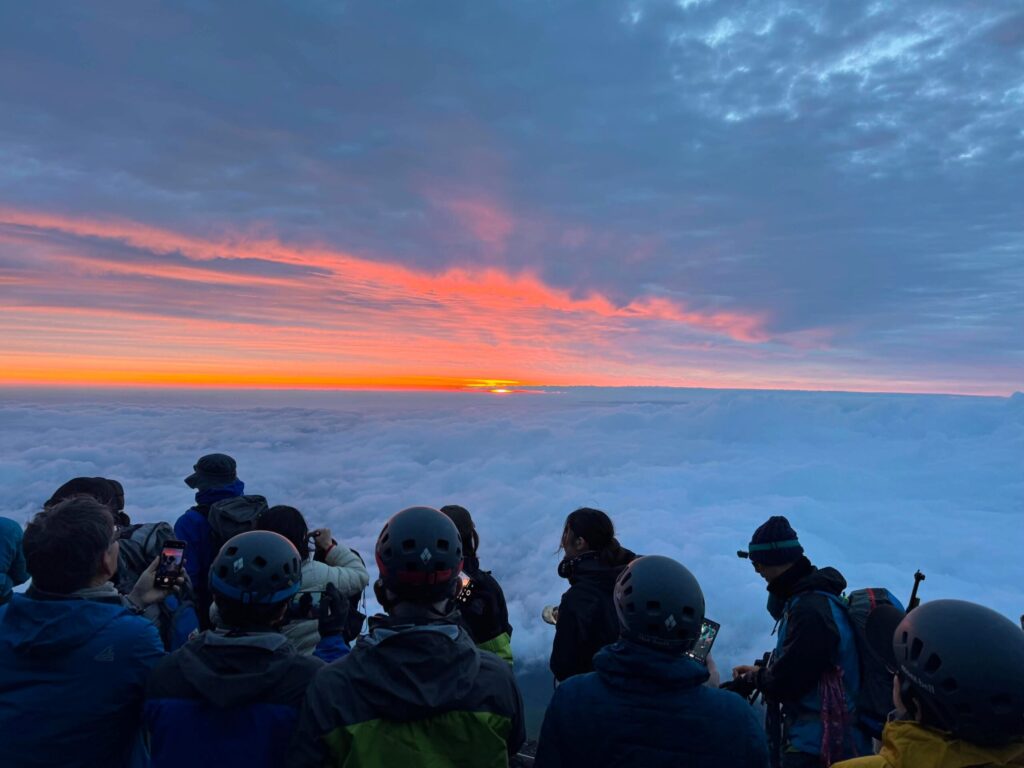
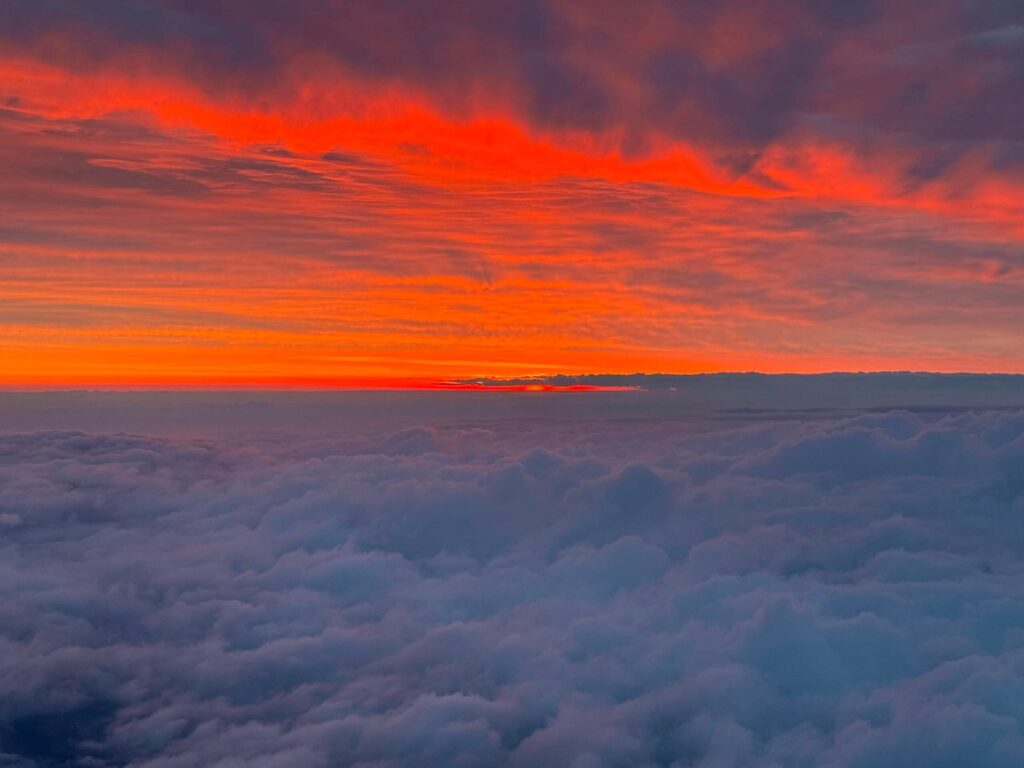
I was left with a profound sense of achievement and stood in absolute awe of the panoramic view. The beautiful sea of clouds beneath us was stunning. My friend and I shared the joy of our great success.
The boundary between the sky and the sea of clouds glowed in a deep, fiery orange dawn. As the line brightened, you could feel how majestic it was going to be. When the sun finally broke through, it took center stage, with every single climber locking eyes on the view and snapping photos from every angle.
A Confession…
I need to confess something, mate. I had such a terrible headache and nausea from the altitude sickness that I couldn’t even pull a smiling face for our summit photos. Sorry about that! 🙁
Honestly, I wanted to descend the mountain the second the sun came up because I couldn’t tolerate the cold and my splitting headache. However, because we were on a group tour, the other members wanted to linger at the peak hut to sip warm soup. I couldn’t be selfish and head down alone, so I had to wait. I really wished I could have been in the mood to linger and share the happiness, but I was hurting!
7. The Long 4-Hour Descent
Compared to the way up, descending Mt. Fuji was a breeze. It’s a long, steep downward path that looks like it will last forever, but it was way easier than I thought it would be.
The further down we went, the more comfortable I became. As the air grew thicker, I felt myself coming back to life (though I did pop a painkiller for my headache). Surprisingly, my knees didn’t even hurt. I was able to walk down quickly, reflecting on what we had just achieved.
The only thing to watch out for on the way down is heatstroke. The sun beats down on you, so I made sure to stay as hydrated as possible. After getting over the initial steep hump, it was just a comfortable walk back to where it all began.
We finally made it back to the 5th station! I felt so incredibly proud of my friend, the people on our tour, and myself for what we accomplished over those two days.
Conclusion: Is Climbing Mt. Fuji Worth It?
What I can say about hiking Mt. Fuji is that It is absolutely worth doing.
It is tough, challenging, and not easy at all. The weather can be so harsh that you might be forced to turn back. Altitude sickness is highly likely to tag along, and your legs will feel like they are falling off.
But that is exactly why it feels so good when you finally conquer it. When you look out at that sunrise, you are looking at a gift from God. You should not miss it.
- Will there be a second time? Honestly, absolutely not. haha Once is enough! It’s too hard!
If you want to do it, prepare yourself thoroughly, book a reliable tour, grab a friend, and just do it!
Appendix: Mt. Fuji Packing List & Expenses
My Clothing Layers (What I Wore)
- T-shirt & Long-sleeve shirt (Base layers from WORKMAN)
- Very light jacket ( UNDER ARMAER)
- Uniqlo Ultra Light Down Jacket (Essential for the cold)
- Windbreaker / Rain jacket and pants (An absolute must-have, from Mont-bell)
- Sturdy hiking shoes (Keen)
Tour & Fees (Estimated)
- Jamjam Tour Fee: 20,800 yen (Includes bus transportation, mountain hut stay, dinner, and snacks) → Jamjam Tour :https://jamjamtour.jp/fuji_tour/kanto/JFKYG781.html
- Mt. Fuji Conservation Donation (Entrance Fee): 4,000 yen
Cash to Bring (Mountain Huts are Cash Only!)
| Item / Service | Cost |
| Bottled Drink | 600 yen |
| Hot Miso Soup | 600 yen |
| Toilet Fee (per use) | 200 – 300 yen |
Want to read more about my Mt Fuji climb?
I climbed Mt Fuji on an overnight tour as a complete beginner. I ended up turning the experience — including the exhaustion, nausea, mountain hut and sunrise — into a short Kindle book, I Climbed Mt. Fuji on a Tour.
Read I Climbed Mt. Fuji on a Tour on Amazon →
