

I walked to Hida Folk Village from around Takayama Station on a cold, snowy day.
It took me roughly 30 minutes.
Would I recommend doing the same?
Probably not.
I like walking, I had plenty of time, and I was living in Takayama rather than trying to squeeze everything into a short trip. If you’re visiting as a tourist, I’d take the bus or a taxi and save your legs for the village itself.
And if this is your first trip to Takayama, there’s something else I’d say before you go:
Hida Folk Village is interesting, but I wouldn’t put it at the top of your list.
I enjoyed my visit. I learnt quite a bit about how people used to live in the Hida region, and the snowy scenery was beautiful.
But if you still have the old town, morning market, Takayama Jinya and other central sights to see, I’d do those first.
What Is Hida Folk Village?
Hida Folk Village, or Hida no Sato, is an open-air museum on the outskirts of central Takayama.
More than 30 traditional buildings from the Hida region have been brought together across a roughly 99,000-square-metre site. Inside the houses are everyday objects and tools showing how people once lived in mountain and farming villages.
So this isn’t simply somewhere to look at old houses from the outside.
You can go inside many of them and get a much better idea of what daily life in this part of Japan used to look like.
That was the part I found most interesting.
My First Impression: It’s Really Quiet

The first thing I remember is how quiet it was.
There weren’t many visitors when I went, and most of the people I did see seemed to be international tourists.
It was snowing and absolutely freezing.
But the village looked brilliant in the snow.
The view I remember most clearly is the traditional houses and snow-covered landscape reflected in the pond.
That was probably my favourite part of the entire visit.
I stood there looking across the water and thought it was genuinely beautiful.
No need for a more complicated description than that.
It just was.
It’s Bigger Than It First Looks
From the entrance, I didn’t think I’d need particularly long.
Then I started walking.
There are buildings scattered around the site, and quite a lot of information to stop and read along the way. Inside the houses, you’ll find tools, household objects and other things connected with everyday life in old Hida mountain villages.

That’s what slowed me down.
I wasn’t simply taking a photo of each building and moving on. I’d go inside, look around and read the information.
I even remember seeing actual rice bales.
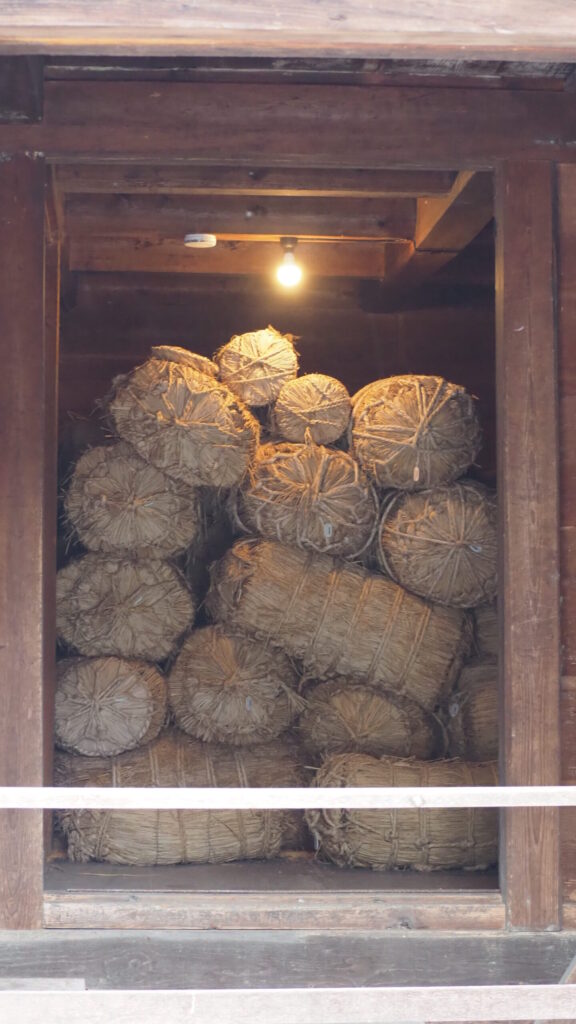
I’d seen them in textbooks before, obviously, but seeing one sitting there in front of me was strangely interesting.
It was one of those little:
Oh, so that’s what they actually looked like.
moments.
The Houses Made the History Easier to Imagine


This was probably where Hida Folk Village worked best for me.
Takayama’s old town gives you historic streets and merchant houses.
Hida Folk Village felt different.
Here I was looking at how people actually lived in rural mountain communities — the houses, hearths, stables, tools and the ways buildings had to work with Hida’s climate.
What interested me was how people had adapted to the environment.
Winters here must have been tough, but instead of simply thinking, Life must have been hard, I started noticing the little ideas that made everyday life possible.
The houses, the tools and the way things were arranged had a reason behind them.
People obviously didn’t have the conveniences we have now, but they weren’t just putting up with the cold either.
They’d worked out how to live with it.
That’s something I probably wouldn’t have understood just by walking through Takayama’s old town.
Although I didn’t need much imagination for one part.
The floors were bloody cold.
You take your shoes off to enter the houses, and in winter that cold comes straight through your socks.
I wanted to look around slowly.
My feet had other plans.
A Hot Amazake Helped
At some point during my walk, I stopped by the pond and had a hot amazake.
Excellent timing.
I’d been wandering around old wooden houses in the snow with increasingly unhappy feet, so standing there with something warm to drink was pretty much exactly what I needed.
It’s a small memory, but it’s one of the things I still associate with the place.
Snow, the pond, old houses and a cup of something warm.
That’s more memorable to me than a list of architectural facts.
How Long Do You Need at Hida Folk Village?
I spent about an hour and a half there.
For me, that was enough.
I wasn’t rushing. I went inside the buildings, read quite a few of the information boards, stopped for photos and generally took my time.
If you’re someone who reads absolutely everything, you could probably stretch it closer to two hours.
But I wouldn’t automatically set aside half a day.
For most people, I’d start with roughly 1.5–2 hours and adjust depending on how interested you are in the buildings and displays.
Should You Walk from Takayama Station?
I did.
I wouldn’t particularly recommend it to most first-time visitors.
The walk itself was actually interesting because it took me in the opposite direction from the side of Takayama where most visitors spend their time.
Instead of old streets and tourist shops, I was walking through much more ordinary parts of the town.
I liked that.
But Hida Folk Village sits on higher ground, so the later part of the walk involves a fairly long uphill stretch. It wasn’t brutally steep, but after walking for a while, you do notice it.
If you’re on holiday with limited time, take the bus.
Official visitor information currently lists the journey from JR Takayama Station at about 10 minutes by bus.
I had time to wander around.
You probably have better things to do with those extra 30 minutes.
What About Shirakawa-go?
This is where I’d change the advice from my old article.
I used to describe Hida Folk Village as a sort of “Compact Shirakawa-go.”
I wouldn’t describe it that way now.
I’ve never actually visited Shirakawa-go, so I can’t give you a first-hand comparison between the two.
More importantly, Hida Folk Village is an open-air museum. Traditional houses from around the Hida region have been brought together to preserve and show the area’s historic mountain-village life.
So I’d treat it as its own thing.
That said, if Shirakawa-go is already a major part of your itinerary, I personally wouldn’t feel that you also have to squeeze Hida Folk Village into the same trip.
If your time in Takayama is limited, I’d use it elsewhere.
So, Is Hida Folk Village Worth Visiting?
Yes — but it’s not one of my priorities for a first trip to Takayama.
I’d go if:
- you’ve already seen the main places in central Takayama and have time left;
- you’re particularly interested in traditional houses and everyday life in old Hida;
- you’re not visiting Shirakawa-go and want to learn more about rural life in the region;
- or you simply want somewhere quiet away from the old town.
If you’ve only got a short time in Takayama, I’d prioritise the old town, Miyagawa area, Takayama Jinya and some of the temples and shrines first.
That’s not because I disliked Hida Folk Village.
Quite the opposite.
I spent a good hour and a half there, learnt things I hadn’t known before and got one of my favourite snowy views from my time in Takayama.
I just don’t think every good place needs to become a must-visit.
Sometimes it’s simply worth going if you’ve got the time.
And for Hida Folk Village, I think that’s about right.
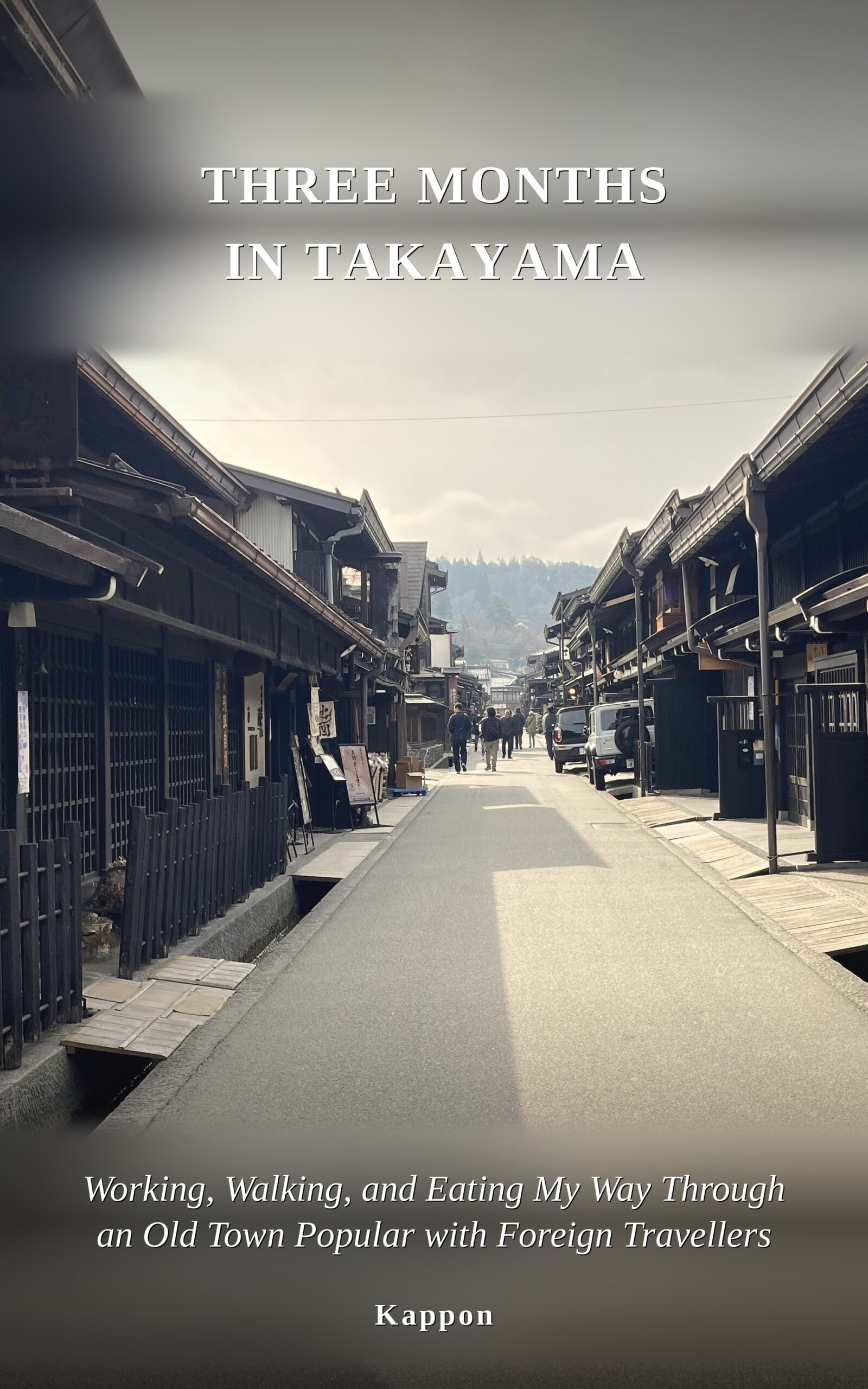
Want to read more about my time in Takayama?
I lived and worked in Takayama for three months, exploring the town and eating my way around it whenever I had time off. I ended up turning that experience into a short Kindle book, Three Months in Takayama.
Read Three Months in Takayama on Amazon →
